Floods cut Mozambique transport links
Stranded minibus drivers face losses as roads collapse
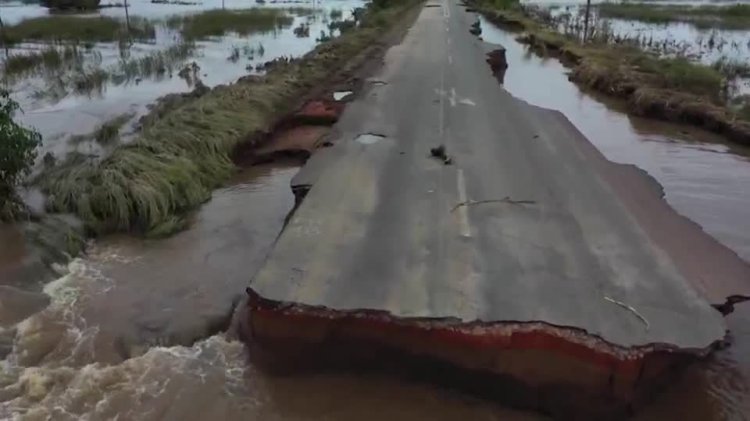
Flooding in Mozambique has severed key transport routes, leaving dozens of minibus drivers and their cargo stranded as roads, farmland and communities remain inundated. Drone footage showed highways carved and collapsed by torrents, with long lines of immobilized vehicles and submerged cropland. Drivers reported perishable goods rotting in their vehicles; one, Abel Chavango, described sacks of flour and vegetables ruined after being stuck for days.
Minibuses—central to daily travel for workers, students and traders—were abandoned on partially submerged roads after bridges gave way or asphalt fissured, forcing operators to shelter by roadside fires or sleep in vehicles. Fuel shortages and blocked links left many unable to return home, recover vehicles or resume services, deepening economic strain for drivers who live on thin daily margins. Markets, schools and access to health facilities have been disrupted, and some rural residents are walking long distances through floodwaters to reach essentials.
Authorities and aid agencies reported major damage across transport corridors, with around 800 kilometres of roads reported damaged or destroyed, complicating relief delivery. Engineers warned that prolonged rainfall weakened road foundations; repair crews have been deployed but full restoration could take weeks amid ongoing wet conditions. The Transport Minister said the railway—after inspection—remained available as an emergency alternative, and that air and maritime support would be used to avert supply shortages.
Emergency services conducted multiple rescues after vehicles became trapped; officials urged motorists to avoid flooded roads and cautioned that collapses may be hidden beneath standing water. Humanitarian groups warned that impassable roads are slowing delivery of food, clean water and medical aid to isolated communities. Local residents have attempted improvised crossings and debris clearance, but called for longer-term investment in stronger bridges, better drainage and climate-resilient road construction.
The government said it is coordinating damage assessments and repairs while acknowledging increasing vulnerability to extreme weather. With continued heavy rains possible, officials and communities face uncertainty over when transport links will be restored and how stranded drivers and affected populations will recover their livelihoods.