Invasion Day protest draws thousands in Sydney
March calls for justice and change to Australia Day
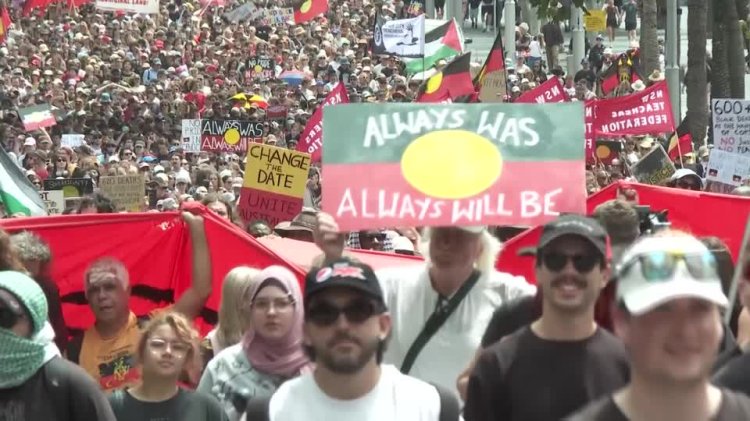
Thousands of people gathered in Sydney for an “Invasion Day” demonstration protesting the nation’s celebration of its founding and calling attention to ongoing injustices faced by Aboriginal and Torres Strait Islander communities. The crowd assembled in Hyde Park, paid tribute to victims of a recent rural shooting and then marched through central Sydney carrying Aboriginal flags, banners and signs demanding justice, truth-telling and a rethink of the national day’s date. Speakers — including elders, activists and community leaders — highlighted systemic issues tied to colonisation: deaths in custody, over‑incarceration, health and housing inequities, and the ongoing removal of Indigenous children from families. Many attendees framed January 26 as a symbol of dispossession and trauma that cannot be separated from Australia’s colonial foundations, and reiterated calls to change the date or abandon Australia Day celebrations altogether.
The protest followed the defeat of a recent referendum on constitutional recognition and an Indigenous advisory body, a result many demonstrators said exposed a wider unwillingness to heed Indigenous voices and strengthened their resolve to keep campaigning. Organisers and participants described the high turnout as evidence of growing public awareness and support, particularly among younger Australians, while critics maintained the holiday should remain unchanged. Police maintained a visible presence to manage traffic and ensure order; organisers reported the march remained largely peaceful with no major clashes.
Similar rallies were held in other cities and regional centres, underscoring the nationwide nature of the debate about how Australia remembers and addresses its colonial past. The Sydney event concluded with cultural performances, moments of silence and further speeches, and organisers urged continued engagement beyond the march: they stressed that changing the date would be symbolic unless accompanied by substantive reforms such as treaty negotiations, truth‑telling processes and measures to reduce Indigenous disadvantage. Protesters said the demonstrations were both an act of solidarity and a reaffirmation of Indigenous resilience, dignity and rights.