Bethlehem lights christmas tree again
Celebration resumes after two years of conflict
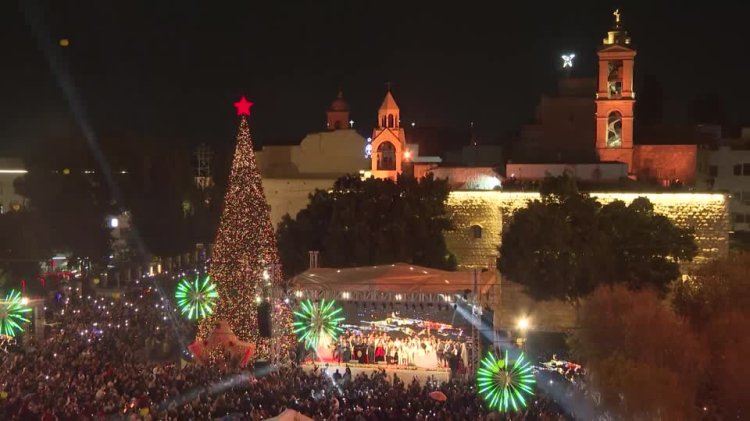
Bethlehem lit a 20‑metre Christmas tree in Manger Square, resuming full public Christmas celebrations for the first time since 2022 after two years of cancellations linked to the Gaza war. Thousands of Palestinians from the West Bank and Israel packed the square as the red‑and‑gold tree was illuminated and choirs returned to the steps of the Church of the Nativity, revered as the birthplace of Jesus.
Organizers and church leaders described the revival as both an emotional and economic milestone. The suspension of festivities in recent years dealt a heavy blow to Bethlehem’s tourism‑dependent economy—shops, hotels and artisans reported steep losses—so the return of pilgrims, candlelit processions toward the Grotto of the Nativity and renewed foot traffic were welcomed as signs of recovery. Preparations took weeks: carpenters rebuilt stages, volunteers decorated alleyways and parish groups rehearsed performances that had been on hold.
Although Gaza lies about 60 km away, residents of the Israeli‑occupied West Bank have been deeply affected by the conflict, with many having family in Gaza and tourism sharply reduced by insecurity. Authorities closely monitored security to ensure the celebrations could proceed safely. Concrete barriers installed around parts of the city during the crisis now bear graffiti and form part of the urban backdrop to the revived festivities.
Business owners said the lighting drew the busiest crowds since disruptions began, while local leaders cautioned that full economic recovery will require time after two difficult years. Musicians performed in the square and children gathered around the towering tree as attendees described the evening as a signal of resilience and a step toward normality. For residents and visitors alike, the restored ceremonies represented more than a seasonal observance: they marked the return of cultural and spiritual rhythms central to Bethlehem’s identity, offering a hopeful affirmation of continuity amid ongoing regional uncertainty.