

Chile sends microbes to space
Extremophiles to test survival in orbit conditions
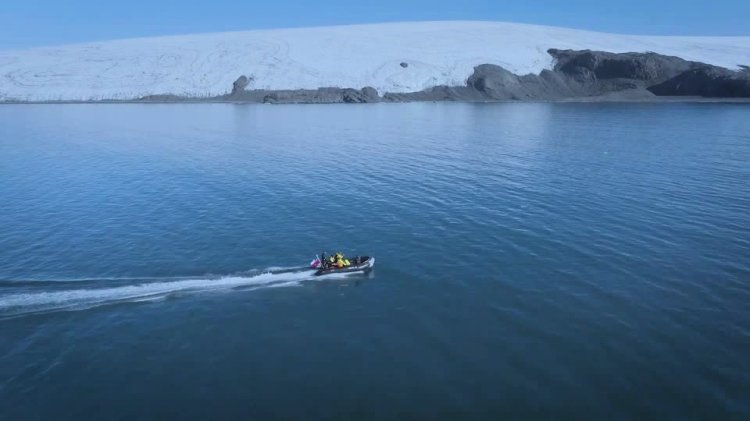
Chilean researchers will send six extremophile microorganisms from Antarctic and Chilean sites into low Earth orbit to test their survival under space conditions, project lead Dr. Jenny Blamey said. The POLARIS (Polar Organisms Launched for Astrobiology Research) mission will carry three extremophile bacteria and three extremophile archaea—organisms considered among the most primitive—collected from Chile’s Atacama Desert and Antarctic ice, permafrost and subglacial environments.
Isolated in Chile, the samples will be exposed in orbit to oxygen-poor conditions, microgravity, intense cosmic radiation and severe temperature swings ranging roughly from −45°C to 60°C for six to eight months. Researchers will compare the space-exposed specimens with matched controls kept on Earth to measure survival rates and assess changes in metabolism, gene expression and cellular damage.
The experiment aims to identify mechanisms that enable life to withstand vacuum-like conditions, radiation and thermal extremes, providing data relevant to astrobiology questions about the potential for life on Mars and icy moons such as Europa and Enceladus. Beyond fundamental science, investigators anticipate practical spin-offs: insights into radiation resistance, cold preservation and robust biochemical pathways could inform biotechnology, medicine and materials science applications on Earth.
The mission will fly aboard a SpaceX Falcon 9 rocket from the Kennedy Space Center, with launch planned for May 11. Scientists say combining Antarctic-derived organisms—natural analogues of extraterrestrial niches—with direct orbital exposure offers a powerful testbed for probing the boundaries of habitability, refining planetary protection protocols and guiding future life-detection strategies.