Serbian parliament erupts in chaos amid protests
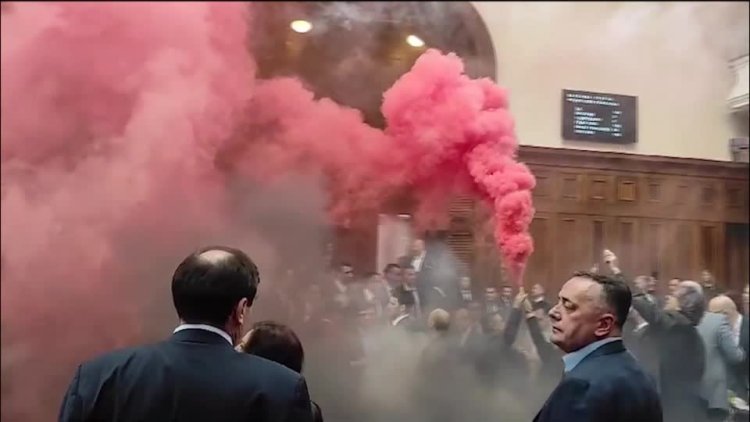
Serbia's National Assembly descended into chaos as opposition lawmakers deployed smoke grenades and tear gas within the parliamentary chamber. This dramatic protest was staged to voice dissent against government policies and to express solidarity with student-led demonstrations that have been ongoing for four months.
The unrest within the parliament resulted in at least three legislators sustaining injuries. Notably, Jasmina Obradović, a member of the ruling Serbian Progressive Party (SNS), suffered a severe stroke after being struck by a projectile and is currently in critical condition. Additionally, Sonja Ilić, an eight-months-pregnant lawmaker, was hospitalized due to smoke inhalation, alongside another injured parliamentarian.
The session was initially convened to address several pressing issues, including a proposed law to increase university funding—a key demand of the protesting students—and to formally acknowledge the resignation of Prime Minister Miloš Vučević, who stepped down in January amid escalating protests. Despite the turmoil, Speaker Ana Brnabić chose to proceed with the parliamentary agenda, a decision that has drawn criticism from opposition members who accuse the government of undermining democratic processes.
The catalyst for the ongoing protests was a tragic incident four months prior, where the collapse of a train station roof in Novi Sad resulted in 15 fatalities. This disaster has been widely attributed to governmental corruption and negligence, fueling public outrage.
Outside the parliament building, protesters maintained a silent vigil to honor the victims of the Novi Sad tragedy, further highlighting the deep-seated grievances against the current administration. The convergence of internal parliamentary strife and external public dissent underscores a pivotal moment in Serbia's political landscape, with the government's response to these challenges being closely scrutinized both domestically and internationally.