

Turkish team studies Antarctic waters
Scientists examine ecosystems and climate signals during Turkey’s 10th Antarctic expedition
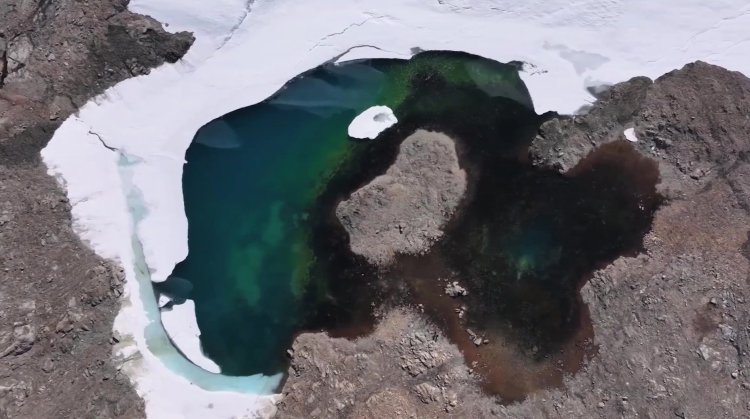
Turkish scientists are carrying out an extensive research program in Antarctica as part of the country’s 10th National Antarctic Scientific Expedition, focusing on aquatic ecosystems across lakes, coastal waters and meltwater streams. Coordinated by the Polar Research Institute at TUBITAK Marmara Research Center under the Ministry of Industry and Technology and the Presidency, the multidisciplinary team includes marine biologists, limnologists, oceanographers and environmental chemists from several Turkish universities and institutions.
Field teams performed seawater and freshwater sampling, sediment coring and deployment of autonomous sensors to record temperature, salinity, dissolved oxygen and turbidity, and conducted underwater observations and experimental incubations to measure primary production and respiration under varying temperature and light conditions. Researchers collected ice cores, lake sediments and water samples to examine ancient climate records preserved in frozen lakes, map microbial and plankton communities, and study nutrient and carbon cycling. Advanced methods—environmental DNA, metabarcoding, microscopy, stable-isotope analysis and high-resolution chemical assays—are being used to link biodiversity with biogeochemical processes.
A key focus is on potentially toxic phytoplankton, the distribution and transport of persistent organic pollutants, and the diversity of microbial life in sediments, with the aim of assessing water quality and environmental risks. Scientists emphasize that Antarctic aquatic ecosystems are highly sensitive to warming: small shifts in water temperature or ice-melt patterns can alter biological communities and nutrient flows. The team is working alongside international programs and using an ice-capable research platform with onboard laboratories for logistics and shared infrastructure.
Data gathered during the several-week field campaign are expected to yield baseline datasets for long-term monitoring, inform peer-reviewed studies on polar microbial and plankton ecology, and improve understanding of how climate change and human-associated contaminants affect Antarctica’s fragile marine and freshwater environments. Follow-up laboratory analyses and publications are planned after the expedition concludes.