

Algerian villagers keep salt tradition alive
Leaders vow stronger ties on trade, defense and global issues
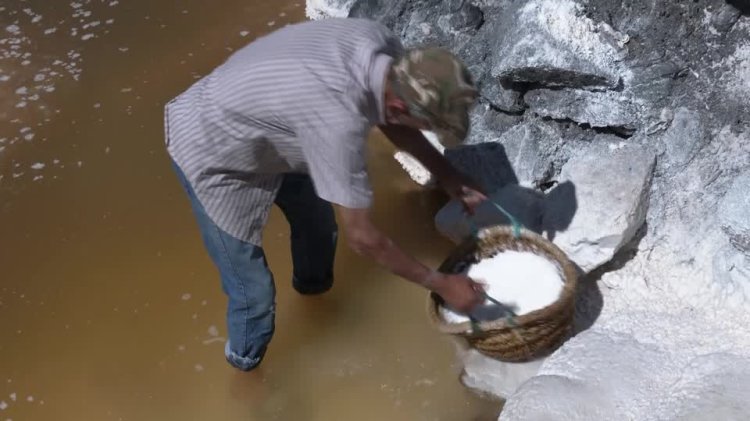
Villagers in Belayel, situated in Algeria’s Kabylie mountains, continue to harvest salt by hand from a high‑altitude natural salt lake using a centuries‑old solar evaporation technique. Water is channelled into shallow basins; over several hot summer days the water evaporates and leaves behind mineral‑rich crystals that are raked, washed and sun‑dried before sale.
Workers describe the craft as an inherited “blessing.” Sixty‑three‑year‑old Mouhouche Oulha says he has practiced the trade for 27 years and praises the salt’s culinary and medicinal qualities. Harvest cycles last roughly four to nine days depending on heat; temperatures during the season can climb as high as 47 °C, making the work physically demanding. Elders and experienced harvesters lead the operation, passing techniques and knowledge through apprenticeship rather than written records.
A weekly market held during extraction season attracts buyers from surrounding areas. The fair offers Belayel salt alongside figs, olive oil, hot peppers and mountain herbs; a kilogram of salt sells for about 90 dinars (roughly $0.70). Though modern, industrial salt production supplies most of Algeria, Belayel’s artisanal product preserves local livelihoods and generates income in an otherwise economically challenged region.
Historically, salt from these highlands was traded across North Africa and into Europe and was prized both for flavor and for traditional medicinal uses attributed to its mineral content. Today the harvest remains a cultural touchstone: the unchanged technique—manual raking, washing to remove impurities, and sun‑drying—serves as a living link to the community’s past. The sebkha sits within the wider Atlas mountain system, a landscape of rugged peaks and fertile valleys where many villages retain deep ties to ancestral practices.
The persistence of Belayel’s salt harvest highlights a broader contrast in Algeria between rapid industrial growth and pockets of enduring traditional economy. For locals, the work is more than commerce: it is cultural continuity, a hands-on preservation of knowledge and identity passed down through generations and sustained by communal participation despite harsh climate and limited modernization.