

Bolivia celebrates Day of the Dead
Families honor ancestors with music, food and ritual
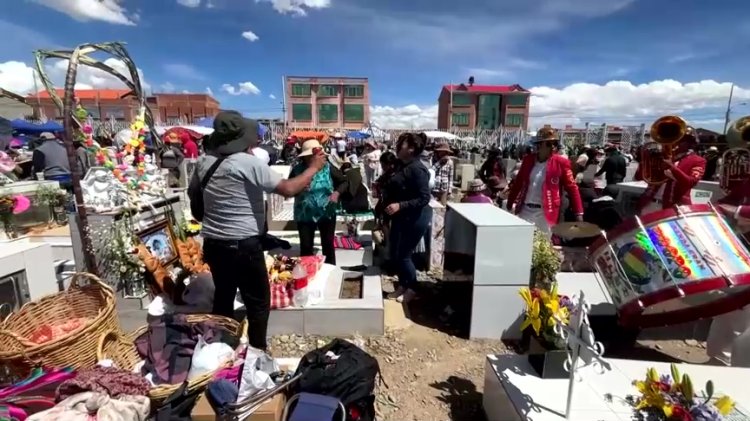
Families filled cemeteries across Bolivia to celebrate the Day of the Dead, turning burial grounds into lively spaces of music, food and ritual as they honoured deceased relatives. In El Alto’s Mercedarian Cemetery, bands played while mourners gathered at graves to sing, pray and leave offerings such as bread, flowers and personal items. The gatherings blended Catholic observance with Aymara customs: spiritual guides led prayers to accompany souls, while families spread blankets to share meals beside tombs and brought traditional “tanta wawas” — small bread figures shaped like children that symbolically represent departed loved ones.
In La Paz’s General Cemetery and other sites, guitarists, trumpeters and Andean flutes (pinkullus) provided a soundtrack to the rites, reflecting the widespread belief that death is part of life’s cycle and that the dead return to join the living during this period. Grave sites were cleaned and decorated in advance, and offerings sometimes included candles and cigarettes alongside food, reinforcing communal bonds and collective remembrance.
The festivities also connect to the Aymara observance of Día de las Ñatitas, the “Day of the Skulls,” celebrated around early November, when devotees venerate human skulls thought to carry protective spirits. Skulls are dressed with flowers, hats or sunglasses and taken to cemeteries for blessing, song and shared offerings, underscoring the syncretic mix of indigenous and Catholic practice that characterizes Bolivian commemorations.
Although some Church officials have critiqued aspects of the traditions as incompatible with Christian teachings, the rituals remain deeply rooted in local culture. Participants and observers note that the tone of the holiday is celebratory rather than solely mournful: music, communal meals and festive decorations emphasize continuity, memory and renewal. The gatherings attract thousands and serve both as private acts of remembrance and as public expressions of cultural identity, highlighting how Bolivians maintain active ties with the deceased through ceremony, song and shared sustenance.