

China startup pushes reusable rockets
Landspace embraces spacex-style risk to reshape launch sector
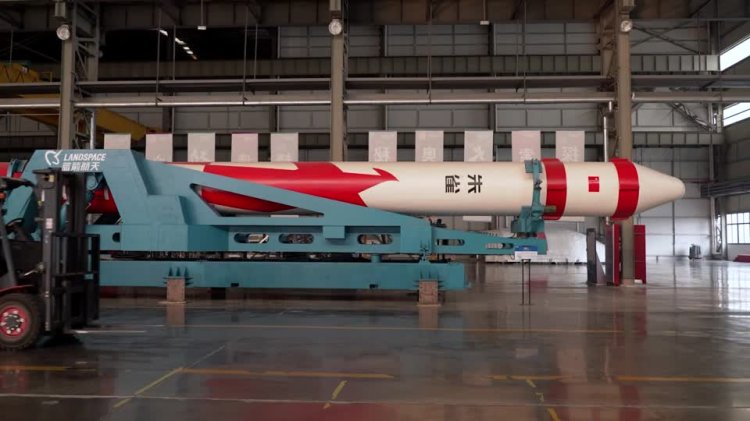
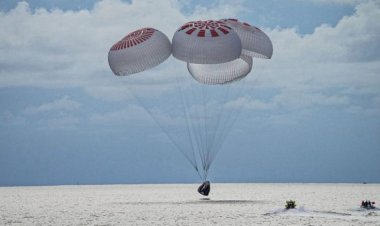
China’s private rocket firm LandSpace is accelerating a shift in the nation’s space sector by embracing a startup ethos and reusable-rocket ambitions inspired by SpaceX, prompting wider industry and state actors to tolerate higher-risk, faster-iteration development. LandSpace’s recent maiden flight of its reusable Zhuque-3 booster ended in failure when the stage failed to ignite its landing burn three kilometres above ground, crashing instead of completing a controlled recovery. State media also widely reported two subsequent failed recovery attempts by other Chinese launchers, including a state-owned firm, marking an unusual public acknowledgment of setbacks in China’s traditionally risk-averse, state-dominated programme.
Founded in 2015 after Beijing opened parts of the space industry to private capital, LandSpace has openly modeled aspects of its approach on SpaceX—prioritizing rapid testing, iteration and cost reduction through partial reusability. Zhuque-3 chief designer Dai Zheng said he left the main state developer in 2016 to pursue a reusability-focused vision at a private company, praising the ability of firms like SpaceX to “push products to the edge” and learn quickly from failures. LandSpace earlier achieved a milestone with the liquid oxygen–methane Zhuque-2 rocket, demonstrating advanced propulsion technology seen as critical for reusable launchers.
Chinese authorities view reusable rockets as strategically important; they enable high launch cadence and large satellite constellations, capabilities exemplified by SpaceX’s Starlink and now a priority for Beijing as it seeks to develop extensive low-Earth-orbit systems. LandSpace aims to provide a domestic, lower-cost launch option to support plans for thousands of satellites, positioning itself alongside other private startups racing toward reusability.
The company benefits from favorable policies, access to domestic supply chains and a growing customer base, including state-backed payloads, yet faces significant technical and scale challenges to match SpaceX’s years-long lead in recovery success, launch frequency and integrated services. Experts caution that dependence on external partners, the complexity of developing repeatable recovery operations and competition within China’s crowded commercial launch market will test LandSpace’s trajectory.