Diving chess crowns new world champions
Dutch players dominate 2025 underwater chess event
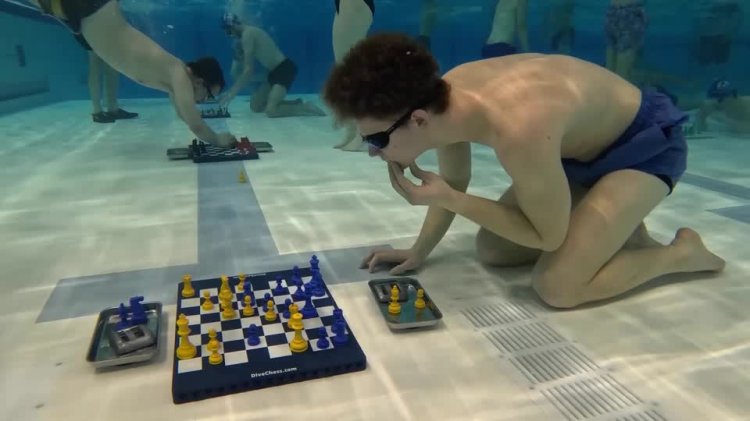
A new world champion was crowned at the 2025 Diving Chess World Championships, a niche sport that blends breath-hold diving with over-the-board chess played on weighted magnetic boards fixed to the pool floor. Former Dutch national champion Zyon Kollen won the men’s title, with Jurrian de Graaf finishing runner-up and Michel Timmer third. Seventeen-year-old Josephine Damen of the Netherlands claimed the women’s crown.
The tournament was capped at 40 competitors who faced not only opponents’ strategy but the physical challenge of holding their breath in cold water while making a single move per dive. Matches required players to dive to the submerged board, execute one move, then surface to breathe before the next turn; specially designed magnetic pieces prevented drift and judges enforced time and rules compliance. Safety measures included limits on dive duration, mandatory rest intervals, medics and rescue divers on standby, and close monitoring by officials; organizers reported no serious incidents.
The event, held in a deep-water pool under strict supervision, featured an unusually wide age range: the 2025 field included three 10-year-old participants competing against experienced veterans. Observers said the finals showcased precise openings and endgame technique executed under visible physical strain, with the champions praised for calm, efficient play that minimized underwater time while preserving positional control. Applause followed confirmation of the decisive moves and official results.
Diving chess, created as an extreme variant of traditional chess, emphasizes breath control, preparation and concentration under pressure as much as tactical skill. Advocates argue the sport spotlights discipline and appeals to athletes drawn to hybrid mental-physical challenges; critics label it a novelty. Participation has been growing, with emerging national associations and organizers planning to expand future championships.
Officials emphasized that safety protocols were central to the competition’s design and execution, and said post-event review will inform any rule refinements as the sport seeks wider recognition. Competitors reflected on the unique demands of combining the silence and focus of chess with the controlled calm required underwater, describing the discipline as a test of mastering two extremes at once.