


Flooding hits southern california
Atmospheric river brings flash floods and evacuations
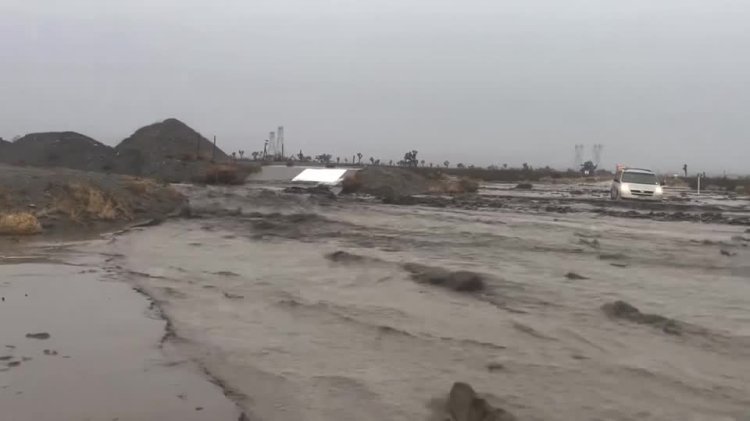
Torrential rains from an atmospheric river slammed Southern California, triggering widespread flash flooding, mudslide risk and travel disruptions as authorities urged residents to avoid roads and evacuate vulnerable hillside communities. Intense downpours—locally exceeding an inch (2.54 cm) per hour and totaling 4 to 8 inches in some foothill areas by midmorning—overwhelmed drainage systems, submerged streets, prompted numerous rockslides and left intersections resembling shallow rivers. Officials warned conditions were life-threatening and forecast additional rain and mountain snow through the period.
Emergency crews answered dozens of calls for stalled vehicles, flooded homes and downed trees; some roads and freeway ramps were closed as a precaution. Power outages occurred in scattered areas after strong gusts toppled trees and power lines. Los Angeles city authorities ordered evacuations for roughly 130 homes judged at high risk of mudflows and debris in burn-scarred neighborhoods, and urged motorists not to travel unless fleeing flood zones or under evacuation orders. A rare tornado warning was briefly issued for part of east-central Los Angeles County amid intense thunderstorms.
The storm’s heavy precipitation posed acute hazards below recent wildfire scars, where stripped vegetation and loosened soil heighten landslide and debris-flow danger. In Altadena—hard hit by last year’s Eaton Fire—houses under reconstruction were wrapped in tarps and plastic as added protection. Forecasters predicted more than a foot (about 30 cm) of rain in some lower-elevation mountain areas by week’s end, along with heavy Sierra snow at higher altitudes.
Air travel and public transit experienced weather-related delays, notably at Los Angeles International Airport as visibility and congestion worsened. City and county crews increased preparations beforehand—clearing drains and stationing response teams—but officials cautioned that urban infrastructure strained by prolonged dry spells was ill-equipped for the sudden volume of runoff. Meteorologists and emergency managers stressed that climate-linked extremes are making such intense short-duration rainfall events more frequent, compounding challenges for flood control and slope stability.
Authorities asked residents to monitor official alerts, avoid flooded roads and heed evacuation notices. Emergency services remained on high alert, working to contain immediate threats and hoping the heaviest bands would pass without catastrophic damage, while warning that conditions could deteriorate quickly if rainfall intensifies again.