London's Notting Hill Carnival marks 60 years
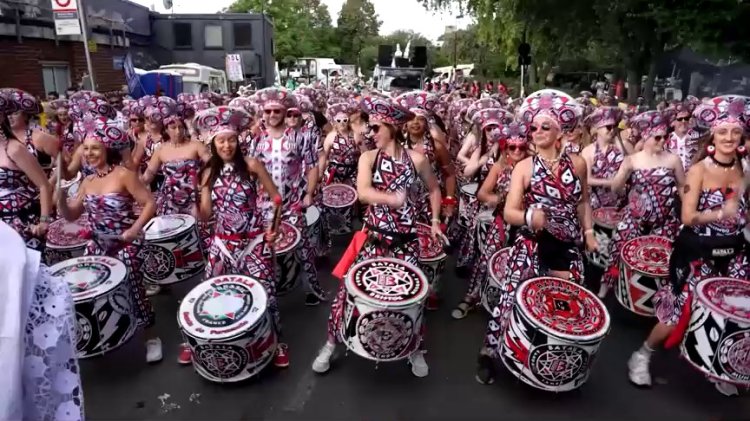
London's Notting Hill Carnival commemorates its sixtieth anniversary, celebrating six decades of vibrant cultural heritage in the British capital. This annual event traces its origins to the mid-1960s, emerging from the Windrush Generation and Afro-Caribbean community's efforts to foster unity and celebrate traditions amidst racial tensions in post-war Britain. Activist Claudia Jones organized a precursor indoor carnival in 1959. The first street festival, with Russell Henderson's steel band, took place in 1966, organized by Rhaune Laslett. The carnival has grown into one of the largest street festivals globally and the largest in Europe, attracting approximately two million visitors annually from across the UK and beyond. It is renowned for spectacular parades, with performers in elaborate, colourful costumes reflecting Caribbean culture. The air fills with infectious rhythms of steelpan bands, calypso, soca, reggae, and dub music from sound systems and stages throughout Notting Hill. Beyond the music and spectacle, the carnival expresses identity, community spirit, and resilience. It highlights the significant contributions of the Caribbean diaspora to British society, serving as a platform for artistic expression, music, design, and business. This year's Diamond Jubilee celebrations include events, talks, and community initiatives, underscoring the carnival's enduring legacy and evolution. Its six-decade journey testifies to its role in promoting multiculturalism, unity, preserving Caribbean heritage, and transforming west London into a dynamic hub of festivity each year.