China advances hydrogen fuel cells
New system boosts drone flight endurance
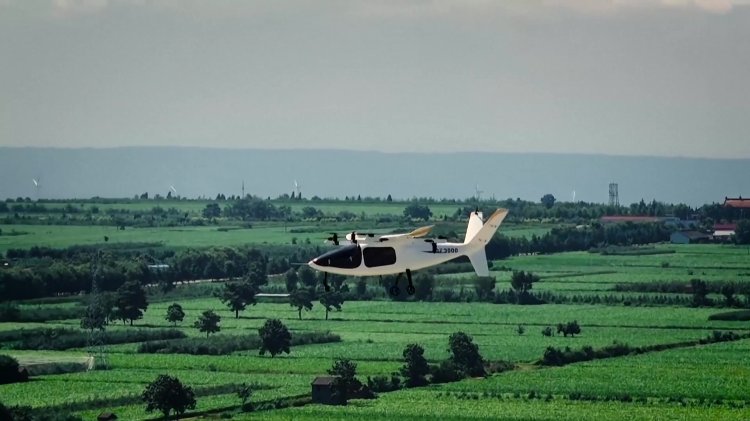
China’s Dalian Institute of Chemical Physics has won formal appraisal approval from the China Petroleum and Chemical Industry Federation for a new hydrogen fuel‑cell system called the “High‑Specific‑Power Cathode‑Closed Air‑Cooled Stack.” The committee judged the technology highly innovative with independent intellectual property, reporting that the stack’s specific power ranks among the world’s highest and that the overall system has reached a world‑leading level.
Developed for small‑to‑medium power applications, the cathode‑closed air‑cooled stack offers high power density, strong environmental adaptability and extended service life. The project team established an end‑to‑end R&D chain spanning materials, components and systems, and set up an automated production line to enable large‑scale delivery. Several practical deployments have been reported, including forestry, agriculture, power‑line inspection and emergency rescue operations.
A highlighted application is industrial drones: demonstrators equipped with the hydrogen fuel‑cell system achieved more than double the endurance of comparable lithium‑battery drones, addressing typical battery limitations such as weight, recharge time and performance declines in extreme conditions. The fuel cell’s electrochemical conversion of hydrogen to electricity produces only water as a byproduct, positioning the technology as a cleaner alternative for prolonged airborne missions.
Researchers acknowledge remaining challenges—hydrogen storage, cost reduction and infrastructure—but say further testing is underway to improve stability and readiness for broader commercial use. If scaled successfully, the innovation could accelerate adoption of hydrogen‑powered unmanned systems across surveying, agriculture, logistics, environmental monitoring and disaster response, and contribute to wider efforts to integrate hydrogen into low‑emission transport and aerospace solutions. The appraisal positions the technology as a candidate for near‑term industrial rollout and broader deployment where long‑duration, high‑power performance is required.