Protests erupt as Nicolás Maduro appears in Manhattan court
Supporters rally as Venezuelan leader pleads not guilty in New York
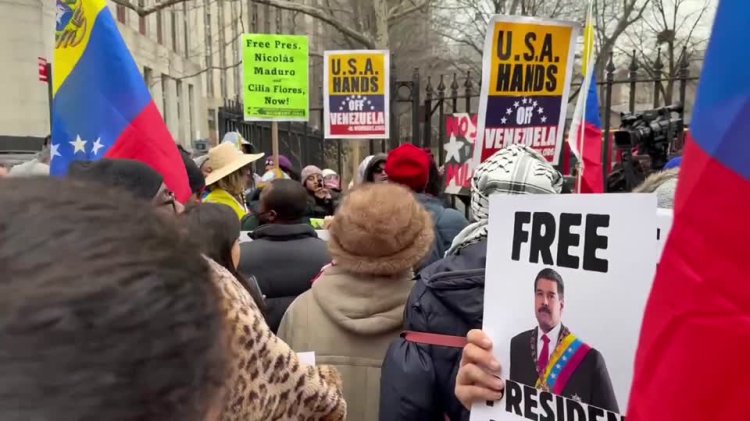
A crowd assembled outside the federal courthouse in Manhattan as Venezuelan president Nicolás Maduro faced U.S. charges after being captured by American forces and brought to New York. Supporters rallied around demands for his immediate release, denouncing the detention as “kidnapping,” “political theater” and an unlawful act of U.S. aggression that could destabilize Venezuela and the region. Speakers at the demonstration characterized the court proceedings as illegitimate and framed Maduro as a defender of sovereignty against foreign interference, warning that such moves risk broader unrest across Latin America.
Maduro pleaded not guilty in federal court to four counts, including narco‑terrorism, conspiracy to import cocaine, and possession of machine guns and destructive devices; his wife, Cilia Flores, also entered a not guilty plea. U.S. prosecutors allege Maduro ran a transnational cocaine‑trafficking operation that collaborated with violent criminal groups, including Mexico’s Sinaloa and Zetas cartels, Colombia’s FARC and Venezuela’s Tren de Aragua gang—charges Maduro has repeatedly denied, calling them a pretext for seizing Venezuela’s oil wealth. A follow‑up hearing was scheduled for March 17.
Security measures around the courthouse were heightened as police erected barricades and increased officers to manage a charged atmosphere where pro‑Maduro demonstrators and opponents of his regime confronted one another. Authorities worked to separate rival groups to prevent clashes. While some protesters hailed the U.S. action as a necessary step against alleged corruption and criminality in Caracas, others condemned it as an unlawful intervention and a dangerous escalation of U.S. influence in the hemisphere.
The demonstrations underscored deep divisions within Venezuelan diaspora communities and among U.S. activist circles over the legality and implications of the U.S. operation. Supporters argued that detaining a sitting head of state violates international norms and could provoke regional instability, while critics of Maduro pointed to the criminal charges and long‑standing allegations of corruption and human rights abuses under his rule. Observers warned the case could prompt diplomatic fallout and heightened tensions between the United States and allied or sympathetic governments in Latin America.
As the legal process moves forward, attention will focus on courtroom developments, potential diplomatic responses from Caracas and allied states, and the domestic political ramifications in Venezuela. The polarized public reaction in New York reflected broader global debate over intervention, accountability and the limits of state sovereignty when criminal allegations implicate sitting national leaders.