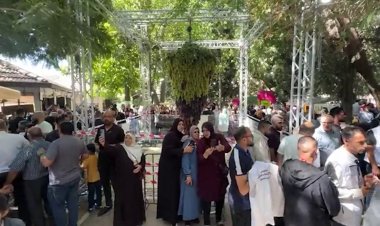
Patriarch Kirill leads Christmas liturgy in Moscow
Russian Orthodox chief presides over midnight service at Cathedral of Christ the Saviour
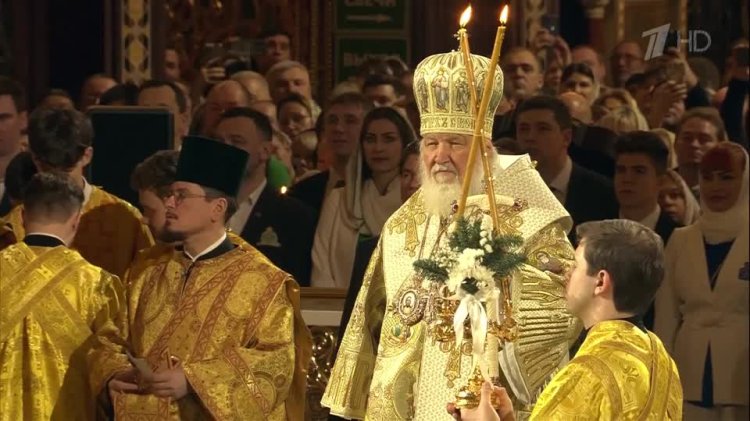
Russian Orthodox Patriarch Kirill presided over a Christmas Divine Liturgy at Moscow’s Cathedral of Christ the Saviour, leading one of the church’s principal services as worshippers filled the landmark cathedral for the midnight observance. The liturgy followed traditional Orthodox rites: clergy-led processions, chanted prayers, hymns from the choir, candle lighting and the sign of the cross by congregants. Patriarch Kirill delivered sermons emphasizing spiritual strength, moral values and communal solidarity during what he described as a challenging period for the nation and the wider world, urging believers to remain steadfast in faith and to support one another through prayer and compassion. While his remarks did not include explicit political declarations, they echoed themes the church commonly invokes in times of national strain.
The event underscored the close relationship between the Russian Orthodox Church and the state. Services by the patriarch are routinely broadcast on state media and draw senior officials; this year President Vladimir Putin attended a separate Christmas liturgy at St. George Cathedral in the Moscow Region, where he was accompanied by military personnel who served in the conflict with Ukraine and their families. The presence of high-ranking figures and the prominent placement of security around ecclesiastical sites highlighted the interweaving of religious ritual, public ceremony and state symbolism. Officials said the cathedral service proceeded without incident.
For many worshippers, the liturgy provided a meaningful continuity with centuries-old traditions marking the Nativity of Jesus Christ, observed by Orthodox Christians on the night aligned with January 7 in the Gregorian calendar. The Cathedral of Christ the Saviour—rebuilt in the 1990s on the site of a Soviet-era demolition and long a potent national symbol—served as the focal point for communal observance, reinforcing the church’s cultural and spiritual significance. Clergy and congregants exchanged blessings at the conclusion of the service, and church officials framed the liturgy as a reaffirmation of faith and unity among believers.
Observers noted the dual character of the ceremonies: deeply religious in form and sentiment, yet also resonant with public and political undertones given the church’s institutional role and visible ties to state power. The combined scenes of devout worship, televised rituals and official attendance illustrate how major Orthodox celebrations in Russia function simultaneously as spiritual observance and national ritual, reinforcing identity and continuity amid social and geopolitical pressures.