

Radioactive rhino horns fight poaching
Scientists say isotopes make horns traceable and useless
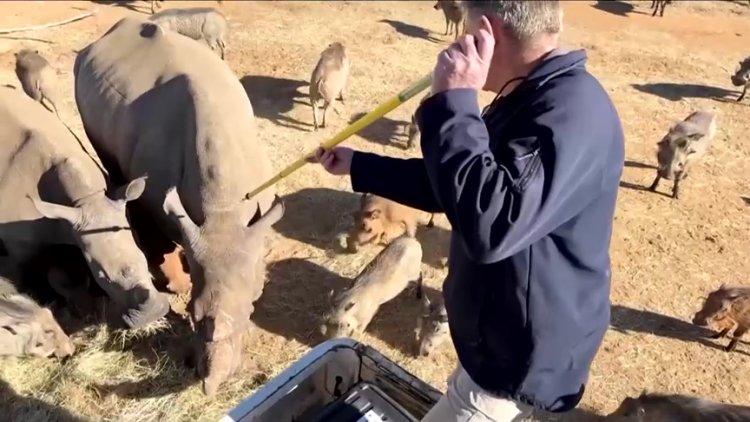
In an effort to combat wildlife trafficking, South African scientists are inserting radioactive material into rhino horns to make them traceable and less desirable to poachers.
The initiative, known as the Rhisotope Project, is led by the University of the Witwatersrand and supported by the International Atomic Energy Agency (IAEA). It combines the safe placement of radioactive isotopes into rhino horns with existing nuclear security infrastructure to detect and deter illegal trade.
The method involves drilling into the horn and placing a small amount of radioactive material inside. The rhinos are sedated during the procedure, and health assessments conducted by Ghent University in Belgium have confirmed the process is non-invasive and poses no risk to the animals.
“By making the horns radioactive, we are devaluing them in the eyes of poachers and end users,” said James Larkin, Director of the Radiation and Health Physics Unit at the University of the Witwatersrand. “No one wants a radioactive horn.”
The project was launched in 2021 and has undergone two years of digital modelling, safety testing, and detection simulations. In June 2024, radioisotopes were inserted into 20 rhinos as part of a pilot phase. The results were announced at an event in Limpopo on July 30.
South Africa, home to the world’s largest rhino population, remains a hotspot for poaching. In the first quarter of 2025 alone, 103 rhinos were killed, according to the Ministry of Forestry, Fisheries and the Environment.
The IAEA is providing both technical and financial support to the project under its Coordinated Research Project on nuclear detection technology. The agency says the same radiation portal monitors used to detect smuggled nuclear material can now be used to intercept trafficked rhino horn.
The project’s success could pave the way for similar applications to protect other endangered species, including elephants and pangolins. For now, conservationists hope this fusion of science and security will offer a powerful new line of defence and a future for the species.