Serbian students rally with striking workers
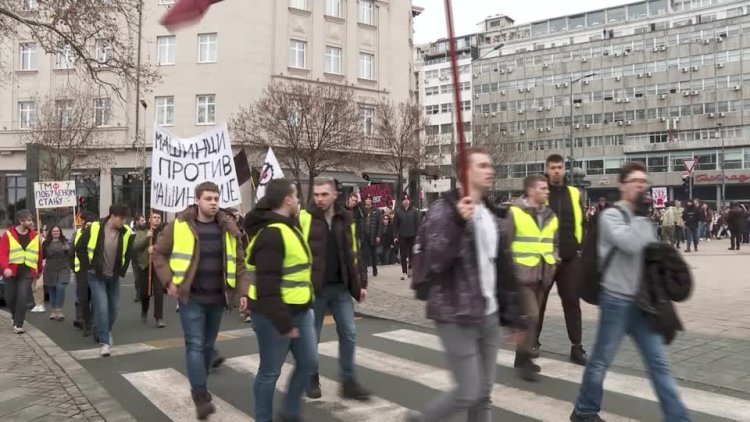
Students marched in solidarity with striking workers of Serbia's state electricity company in Belgrade in a wave of demonstrations that have taken place regularly since 15 people died in a collapse at a railway station in November.
After three months of protests, Serbian demonstrators initiated a general strike, challenging the populist, nationalist government. Spearheaded by students, the movement gained traction after a tragic roof collapse in Novi Sad killed 15 people, symbolizing alleged systemic corruption. Student group STAV (Students Against Authoritarian Rule) emerged as a key leader, organizing protests and demanding justice for the victims.
The protests began with symbolic acts, such as red handprints on government buildings, and escalated to clashes with police. Public outrage intensified after CCTV footage of the collapse went viral. Despite government efforts to dismiss the movement as politically motivated or led by foreign influences, the protesters gained widespread support from civil society, farmers, and academics.
Authorities, including President Aleksandar Vučić, attempted to undermine the movement by negotiating with officially recognized student bodies, but activists accused these groups of being government-aligned. Allegations of political interference in student organizations and the suppression of independent activism fueled dissent further.
Protests swelled to over 100,000 participants, with demonstrations spreading to other cities. Government missteps, such as dismissive remarks about the tragedy and threats of force, only galvanized public support. Solidarity extended to cultural and professional groups, highlighting broader dissatisfaction with the government.
The movement’s outcome remains uncertain, as the government continues to resist protesters' demands while activists call for systemic change. The protests underscore the historical role of student activism in Serbia, drawing parallels with movements that shaped the country’s political landscape in the past.