Humanoid robots perform festival calligraphy
AI-powered robots write “Fu” in Zhejiang showcase blending tradition with technology
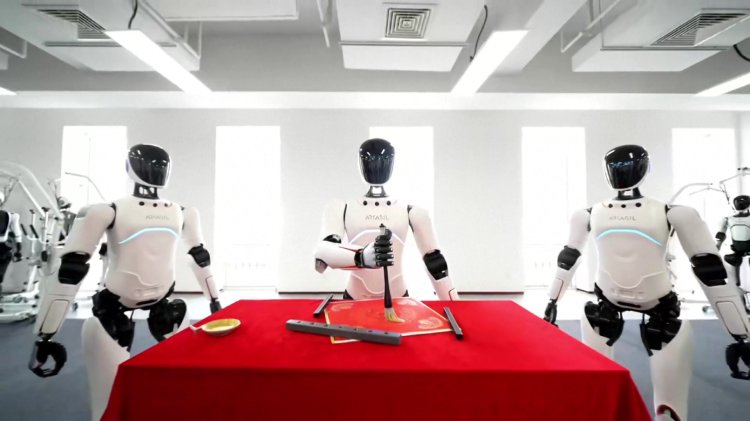
Humanoid robots in Hangzhou’s Zhejiang province staged an expanded Spring Festival calligraphy demonstration, writing multiple versions of the Chinese character “Fu” (good fortune) using motion capture, reinforcement learning and imitation training to emulate human brushwork. Engineers collected stroke data from master calligraphers, converted it into motion trajectories and refined robot control through iterative algorithms so the humanoids could dip brushes, modulate pressure and execute flowing strokes while maintaining balance and stability.
The event, set in a festively decorated exhibition space, ran several sessions showcasing different robot models and calligraphic styles—ranging from bold, traditional scripts to more cursive, expressive variants. Finished red papers were displayed in a gallery wall and distributed to visitors; some pieces were auctioned or donated for community use. Live comparisons with human calligraphers highlighted strengths and limitations: robots delivered high repeatability and precision across dozens of sheets, while human artists produced more spontaneous variations and interpretive flair.
Organizers framed the project as both cultural celebration and public outreach for AI and robotics. Beyond spectacle, demonstrations included education stalls explaining the engineering pipeline—motion capture rigs, data preprocessing, trajectory planning, force control, visual feedback loops and safety systems—and short workshops where attendees tried simple calligraphy under robotic guidance. Developers emphasized potential applications beyond festivals: robot-assisted teaching of calligraphy, preservation of endangered artistic techniques, precision tasks in manufacturing and eldercare assistance where delicate motor control is needed.
Technically, teams addressed challenges such as brush ink dynamics, variable paper compliance and wrist dexterity by integrating force sensors and adaptive control algorithms, and by training models on diverse handwriting samples to improve robustness. Organizers also coordinated with cultural experts to ensure respectful presentation and invited local schools to engage with STEM activities tied to traditional arts.
Public reaction mixed fascination with debate: many praised the blend of heritage and high tech, noting the robots’ educational value and the symbolism of innovation during Lunar New Year. Critics cautioned against overstating machine creativity, underscoring that true artistic interpretation remains human. Ethicists and artists called for careful curation to avoid commodifying cultural practices.