Barcelona's human towers reach new heights
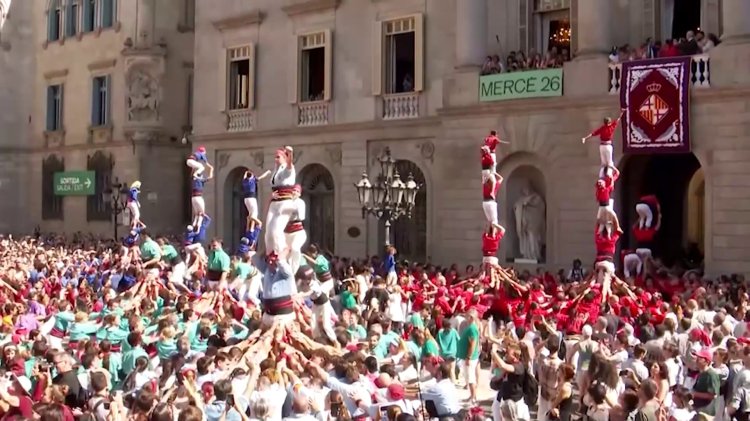
Human towers, known as "castells," are a tradition in Catalonia, Spain, displaying strength, balance, teamwork. Rising six to ten levels high, castells feature in festivities across Catalonia, including Barcelona. The tradition dates to the 18th century, evolving from a folk dance in Valls, near Tarragona. It spread, becoming a symbol of cultural identity. In 2010, UNESCO recognized castells as Intangible Cultural Heritage of Humanity, recognizing solidarity and community. Each castell is built by a "colla castellera," an amateur group. Construction begins with a robust base, the "pinya," formed by hundreds for weight and safety. Above this, the "tronc," or trunk, is assembled, with stronger individuals below supporting lighter members. The most thrilling part, the "pom de dalt," is the uppermost section, formed by agile children. The tower is crowned when the "enxaneta," the smallest child, reaches the top and raises an arm in a symbolic gesture of completion. This requires immense concentration and coordination; each casteller has a specific role. For safety, children now wear protective helmets. The "gralla," a Catalan wind instrument, and drums accompany the performance. The music signals phases of construction, building suspense. Castells embody the Catalan motto "Força, Equilibri, Valor i Seny" (Strength, Balance, Courage, and Common Sense), essential for tower building and community. Barcelona hosts performances year-round, notably during festivals like La Mercè and Festa Major de Gràcia. These events draw crowds to city squares, celebrating a cultural heritage uniting generations.