China launches Shenzhou-22 to Tiangong
Mission provides backup return craft after in-orbit damage
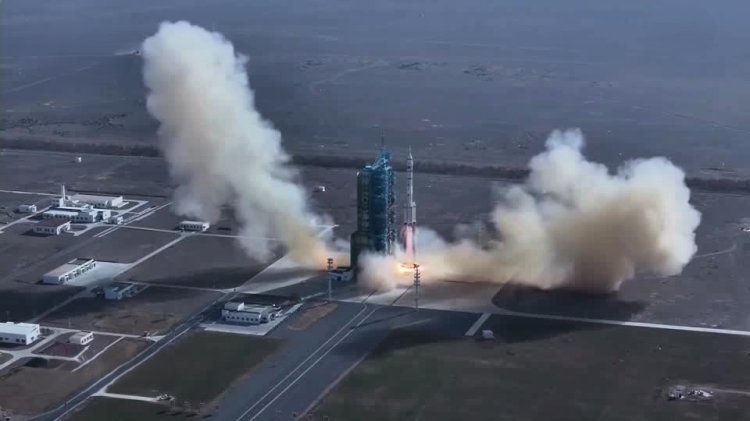
China launched the Shenzhou-22 spacecraft from the Jiuquan Satellite Launch Center in northwest China in an accelerated mission to restore safety margins at the Tiangong space station after a recent in‑orbit spacecraft incident. The unmanned capsule lifted off aboard a Long March rocket and successfully reached its planned orbit, according to state media and space agency reports. Shenzhou-22 carries spare parts, repair equipment and supplies and will berth at Tiangong to provide a flightworthy return vehicle for the station’s crew, removing the immediate risk created when the previously docked Shenzhou-20 was found to have sustained suspected debris damage to its return module.
The damage to Shenzhou-20 earlier this month left the station temporarily without a certified escape craft after Shenzhou-21 had departed the complex earlier than scheduled. China’s rapid decision to accelerate Shenzhou-22—moving the flight up by several months—was presented by officials as an emergency response to close that safety gap, with the spacecraft expected to remain docked through the spring to support the crew and later return personnel to Earth. Engineers reported a clean separation from the launch vehicle and nominal orbital insertion, and China’s manned space authority described the mission as a success.
Chinese authorities emphasized the mission’s role in contingency management and sustaining a permanently crewed station as the country advances its broader human spaceflight ambitions, including a crewed lunar landing goal by 2030. State narratives highlighted the swift, methodical response as evidence of operational resilience in addressing in‑orbit anomalies, noting the roughly two‑week turnaround between problem identification and the emergency launch.
The incident has drawn attention to orbital debris risks, spacecraft vulnerability and the logistical demands of maintaining continuous human presence in low Earth orbit. Analysts said the episode underlines the importance of contingency planning, inspection protocols and rapid-supply capabilities for any permanently crewed outpost. It also renewed international comparisons of emergency responses: Chinese officials contrasted their expedited fix with past extended contingency scenarios experienced by other spacefaring programs.
While Shenzhou-22 eases the immediate safety concern by restoring a dedicated return vehicle, experts said follow-up investigations into the cause of the Shenzhou-20 damage will be crucial for future risk mitigation.