

Indian students unveil AI electric superbike
Surat students in Gujarat build recycled AI bike Garuda
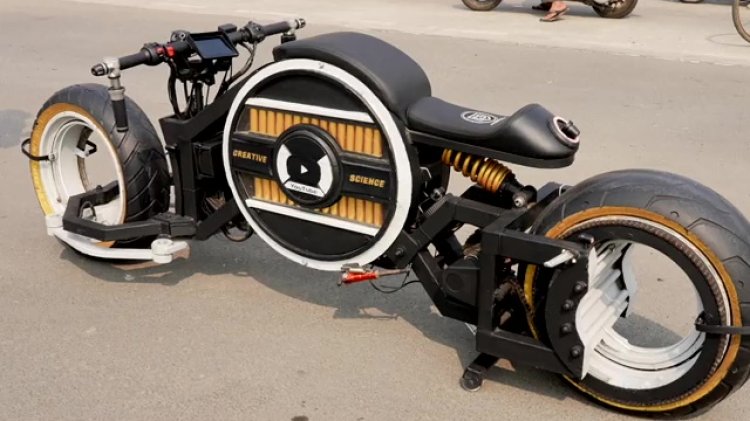
Three mechanical engineering students from Surat, Gujarat, have unveiled Garuda, a prototype electric superbike that integrates artificial intelligence, voice control and autonomous safety features into a largely upcycled frame. Built primarily from discarded metal, old motorcycle parts and recycled electronics, the bike’s aggressive, matte-black design—evoking the fictional Batcycle—pairs a striking visual concept with practical low-cost engineering.
At the core of Garuda is a Raspberry Pi that functions as the central processing unit, running open-source software to interpret voice commands, manage speed and execute automatic stopping without manual braking. The system connects via Wi‑Fi and accepts directives such as slowing down or halting at a set distance. Onboard sensors provide obstacle detection and issue alerts to the rider, and basic navigation assistance helps guide urban trips. Developers say the AI was trained on modest datasets tuned for real-time responsiveness, with safety features slated for further enhancement.
Students described the months-long project as largely self-funded and driven by a commitment to sustainability and hands-on learning. By sourcing materials from scrapyards and local workshops, they kept costs low while demonstrating that advanced vehicle functions can be achieved without expensive proprietary hardware. Faculty supervisors commended the multidisciplinary effort, noting the integration of mechanical design, electronics and software across a single working prototype as a notable educational achievement.
Garuda is not positioned as a production model or a high-speed commercial vehicle; instead, its creators present it as a proof of concept for smart, affordable urban mobility. The team hopes the prototype will inspire similar initiatives that favour creative reuse of materials and accessible technological experimentation. Their stated next steps include refining the AI’s safety capabilities and exploring applications of the platform for practical, low-cost transportation solutions.
The project has drawn attention for blending student innovation, sustainability and emerging mobility tech at minimal expense, spotlighting how grassroots engineering can contribute to future urban transport debates. Observers see Garuda as an example of how open-source tools, compact computing platforms like the Raspberry Pi, and locally sourced components can lower barriers to developing intelligent vehicle features—potentially widening participation in vehicle electrification and AI-enabled safety innovation.