Iran rejects U.S. claims over sanctions
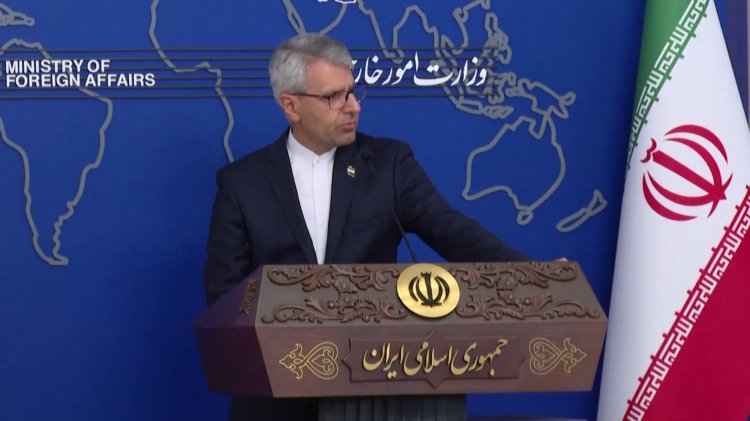
Iran’s Foreign Ministry spokesman Esmaeil Baghaei dismissed the U.S. claim that sanctions are “suffocating” Iran, calling it proof of Washington’s dependence on coercive pressure. He said the United States turns to sanctions whenever diplomacy fails and intensifies them when they still do not work, showing that this is less a policy than a habit. Baghaei argued that Iran has endured decades of economic pressure without yielding and said these repeated measures have failed to break the country’s resolve.
He also said the real cost is being borne by American policymakers, who remain trapped in a crisis of their own making. In his view, the continuing reliance on sanctions only narrows Washington’s options and makes any orderly retreat more difficult. Iranian officials, he added, see the pressure campaign as further evidence that the U.S. approach toward Iran has become ineffective and disconnected from reality.
Baghaei said talks with Oman on a new Hormuz navigation route are progressing smoothly. They are discussing a temporary intermediate route to replace the current northern and southern lanes until a new traffic separation plan is agreed. The proposal would improve safety, address environmental issues, provide ship services, and combat crime, though some technical details remain unresolved.
He blamed the U.S. and Israel for instability and said regional states increasingly see Israel as the main threat, with the U.S. also viewed as a source of insecurity. Baghaei said regional cooperation based on local realities could strengthen stability by identifying the threat clearly. He cited recent defense cooperation involving Türkiye, Saudi Arabia and Pakistan as evidence of more independent security arrangements.
Baghaei comments came as Iran–U.S. friction complicates talks and keeps the outcome uncertain.