Iran stages large Persian Gulf military drill
Iran fires missiles and deploys drones in exercise

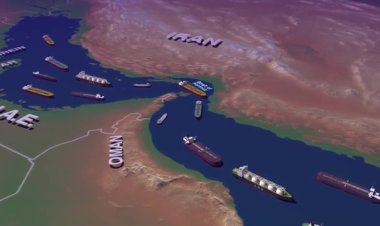
Iran’s Islamic Revolutionary Guard Corps (IRGC) Navy launched ballistic and cruise missiles and deployed drones in the Persian Gulf as part of a large-scale two-day exercise intended to demonstrate readiness and deter foreign threats, state media reported. The operation, conducted under the codename “Eghtedar” and including a phase named for IRGC naval commando commander Shahid Mohammad Nazeri, unfolded across the Strait of Hormuz, the Sea of Oman and nearby maritime zones, including Abu Musa, Greater and Lesser Tunb, Nazeat and Siri islands.
State outlets said multiple cruise missiles — identified as Qadr 110, Qadr 380 and Qadir — and the ballistic missile 303 were fired from inland launch sites and struck predetermined targets in the Sea of Oman with high precision. Drones simultaneously attacked simulated enemy bases, while air-defense systems aboard IRGC vessels carried out intensive drills against aerial threats described in the scenario as targeting fast boat units and coastal positions. Officials highlighted the exercise’s focus on endurance of combat systems and the ability to operate amid enemy electronic warfare.
Advanced air-defense platforms — named Nawab, Majid and Misagh in state reports — were deployed under electronic-warfare conditions and, according to authorities, used artificial intelligence tools to rapidly identify and engage flying and naval targets. The IRGC said that on the opening day naval units issued warnings to U.S. ships in the region, framing the maneuvers as both a demonstration of peaceful intent toward neighbors and a warning that any miscalculation by adversaries would be met with decisive response.
The drills follow a period of heightened tensions in the region, including a reported 12-day air exchange between Israel and Iran in June that involved U.S. strikes on Iranian nuclear sites. Tehran has staged recurring naval exercises in the Persian Gulf and Sea of Oman to showcase capabilities and reinforce deterrence against foreign powers. State media presented the anti-terrorism component hosted earlier in Iran’s northwest with Shanghai Cooperation Organization participants as a separate gesture of “peace and friendship” toward neighboring states, while underscoring a readiness to respond forcefully to perceived threats.
The IRGC framed the multi-domain exercise as validating precision-strike capabilities, coordinated use of missiles and unmanned systems, defensive readiness on sea and air fronts, and resilience against electronic disruption. By simulating simultaneous missile salvos, drone attacks and integrated air-defense responses, Tehran sought to send a calibrated message to regional and extra-regional actors about its capacity to project force and protect strategic waterways.