Maduro leads nationalist march
Rally warns of external threats and urges national unity
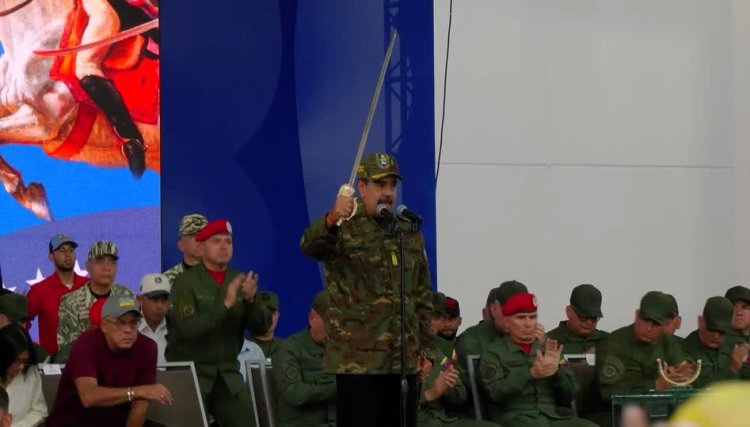
Venezuelan President Nicolás Maduro led a large civic-military march in Caracas, pledging to defend the nation against what he described as imperialist threats and calling for unity among civilians, politicians and the armed forces. Speaking at the Fuerte Tiuna military academy while holding Simón Bolívar’s sword, Maduro framed the mobilisation as a patriotic response to external pressure, particularly from the United States, and urged vigilance, readiness and sacrifice to protect “every inch” of Venezuelan territory. The event drew top government officials, military leaders and ruling-party supporters and featured military displays and public tributes to national symbols.
Government media presented the march as a necessary demonstration of sovereignty amid what Caracas calls escalating U.S. military activity in the Caribbean and intensified diplomatic pressure. Maduro portrayed the armed forces as the nation’s backbone and called on militias and regular troops to be prepared for “all scenarios,” invoking Bolívar’s legacy to legitimize calls for solidarity and resistance. The mobilisation also served as a platform for internal political messaging: rallying the president’s base, reinforcing loyalty within security services, and promoting unity across the ruling movement as Venezuela confronts economic strain and political tensions at home.
Opposition leaders dismissed the mobilisation as a political spectacle intended to distract from economic hardship, governance failures and rising inequality. They accused the government of exploiting fears of foreign intervention to justify deeper militarisation and to consolidate control. International analysts said the march signalled a sharpened nationalist tone in official discourse but noted that no new military deployments or doctrinal changes were announced during the event. Observers warned that heightened confrontational rhetoric risks diplomatic isolation and could raise regional tensions even as Caracas seeks to project strength.
The march reflects a broader pattern of the Maduro administration’s reliance on public displays of force and symbolic gestures to shore up support amid mounting domestic challenges. Social and economic indicators show persistent hardship for many Venezuelans, and experts say government efforts to mobilise patriotic sentiment are aimed at shoring up legitimacy and maintaining cohesion within security institutions. For supporters, the show of unity and defiance reinforced national pride and resolve; for critics, it underscored the administration’s focus on securitised politics over reforms that would address everyday needs.