Shenzhen tests ai guide dog on metro
Expanded trials aim to aid blind riders at busy hubs
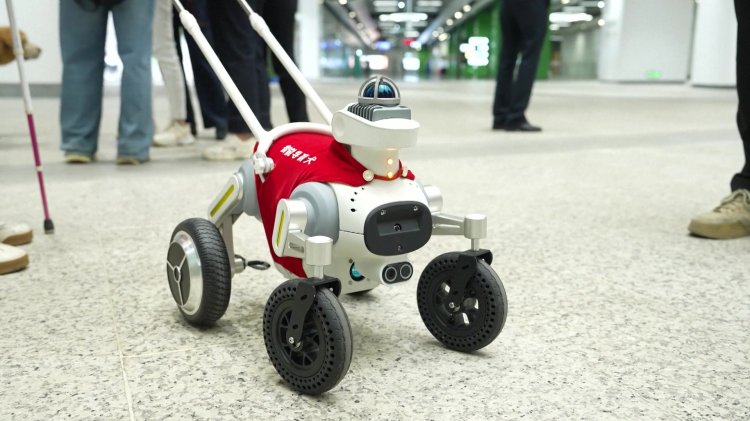
Shenzhen Metro expanded trials of its AI-powered robotic guide dog, Xiaosuan, at the Huangmugang transportation hub after initial tests showed promising results, officials said. The extended pilot will run across additional platforms and concourses to gather broader user feedback from blind and low-vision passengers, station staff and disability advocates, and to stress-test the robot in heavier passenger flows and varied operational scenarios.
Engineers are iterating on hardware and software based on trial data: battery capacity and charging speed are being increased to extend continuous operating time; sensor fusion and 3D-voxel perception models are being refined to improve obstacle detection in dense crowds and complex station geometries; and voice-recognition modules are being tuned for noisy environments and diverse accents. Upgrades to the robot’s large visual language model aim to broaden its contextual understanding so it can answer more complex passenger queries and better integrate live station data such as platform changes, delays and emergency announcements.
Operational trials will also assess human–robot interaction protocols and safety procedures. Shenzhen Metro plans supervised field runs pairing Xiaosuan with trained staff to validate fallback measures when the robot encounters unusual hazards or connectivity loss, and to measure passenger comfort and trust over repeated uses. Accessibility specialists will audit the system’s interactions with existing station features—tactile paving, elevators, signage and audio systems—to ensure the robot complements rather than conflicts with established aids.
Authorities say data from the expanded pilot will inform policies on deployment scale and site selection, and help define maintenance, charging infrastructure and staffing models. Planners are exploring integration with station apps for booking or summoning a guide-robot in advance, and potential interoperability standards so similar devices could work across different transit systems.
Disability organizations called for continued user-centered design and transparent evaluation, urging Shenzhen Metro to publish pilot findings and involve people with disabilities in decision-making. Some advocates also emphasized that robotic aids must not divert resources from systemic accessibility improvements.
If final evaluations are positive, Shenzhen Metro intends a phased rollout to more hubs across the network, followed by potential cooperation with other Chinese cities and international transit operators. Officials say the initiative could set operational and regulatory benchmarks for deploying assistive robotics in public transport, demonstrating how AI-driven devices can augment accessibility, reduce reliance on human escorts, and offer greater independence for visually impaired travelers while maintaining safety and inclusivity.