U.S. boosts Middle East military presence
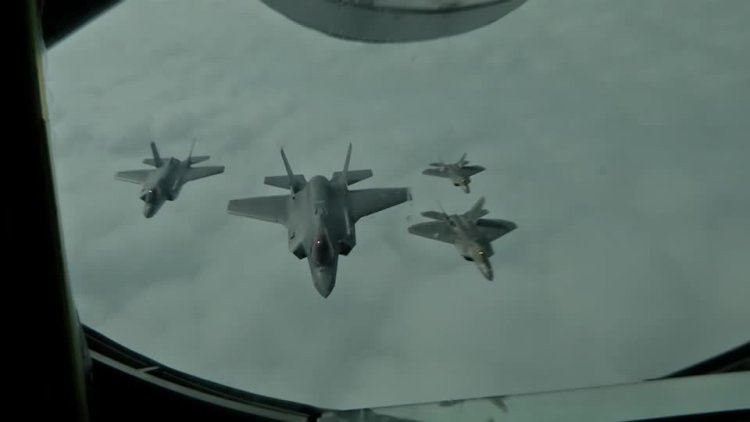
The U.S. military is significantly increasing its presence in the Middle East amid escalating tensions between Israel and Iran. According to three U.S. officials, the Pentagon is deploying additional fighter aircraft, including F-16s, F-22s, and F-35s, while extending the missions of existing warplanes. These deployments are characterized as defensive, aimed at intercepting Iranian drones and missiles to protect U.S. forces and allies in the region.
In addition to the fighter aircraft, the U.S. has repositioned tanker aircraft to Europe to support long-range operations and has rerouted the USS Nimitz carrier strike group to the Middle East. U.S. officials are also considering sending additional Navy warships equipped for ballistic missile defense to the Eastern Mediterranean, further bolstering military capabilities in response to the ongoing conflict.
Currently, nearly 40,000 U.S. troops are stationed in the Middle East, supported by air defense systems and naval assets capable of detecting and neutralizing enemy missiles. This military buildup follows Israel's largest-ever air campaign against Iranian nuclear and military sites, which has triggered retaliatory missile and drone attacks from Iran.
While President Trump has called for Iran's "unconditional surrender," the Pentagon maintains that the current military actions are protective rather than offensive.
U.S. President Trump said that he wants "a real end" to Iran's nuclear program, with Tehran "giving up entirely" its enrichment activities.
Trump said he was not just working toward a ceasefire to end the war between Iran and Israel, but a "real end" to Iran's nuclear plan.
"I didn't say I was looking for a ceasefire," Trump told reporters on Air Force One after cutting short his time at the G7 summit in Canada. "We're looking for better than a ceasefire," he added.