

Ally wins tight Republika Srpska election
Karan’s narrow victory deepens tensions over Bosnia’s governance
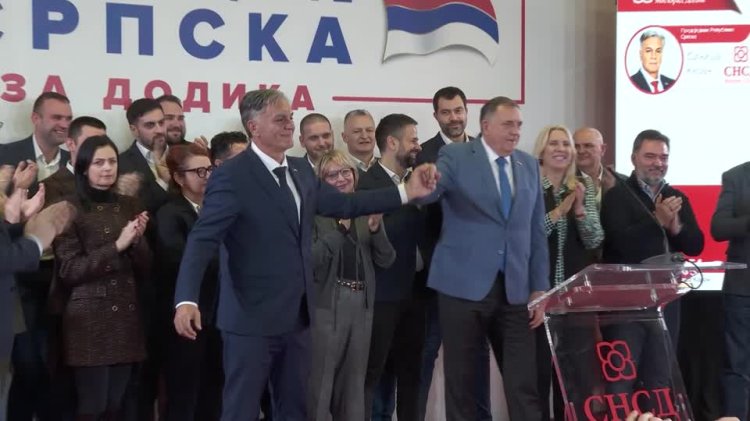
A close ally of expelled Serb Republic leader Milorad Dodik has narrowly won the snap presidential election in Republika Srpska, the Serb-majority entity of Bosnia and Herzegovina, according to preliminary results released by the election commission. Siniša Karan, who served as the entity’s minister for scientific and technological development and is widely viewed as aligned with Dodik, secured 50.89% of the vote versus about 47.81% for his main rival, Branko Blanuša of the Serb Democratic Party (SDS). Voter turnout was low, around 35.8%.
The election followed Dodik’s removal from office after a conviction for defying constitutional court rulings and a subsequent six-year ban from political activity. Karan declared the result a victory for Serb unity and pledged to continue Dodik’s political line, emphasizing greater autonomy for Republika Srpska and skepticism toward Bosnia’s central institutions in Sarajevo.
The opposition has challenged the preliminary outcome, alleging irregularities at several polling stations and indicating it may seek legal remedies or vote reruns in disputed precincts. Those claims could trigger recounts or court proceedings, prolonging uncertainty over the final result.
Observers warn the outcome risks deepening tensions in Bosnia’s fragile post-war governance framework established by the 1995 Dayton Peace Agreement. Analysts say a win for a candidate tied to separatist policies raises concerns that entity-level priorities may increasingly clash with state institutions, potentially undermining coordination on governance, security and international obligations. International and domestic stakeholders will likely watch closely for signs of moves to bolster Republika Srpska’s autonomy or to challenge Sarajevo’s authority.
Karan’s apparent victory signals a political rebound for Dodik’s network within the Serb entity and suggests continuity in the region’s dominant political currents. If the result is upheld, Republika Srpska’s leadership may press for policy shifts reinforcing entity prerogatives, while opponents and some international actors may intensify calls for legal scrutiny and mechanisms to protect state-level institutions. The dispute over the vote’s integrity and the broader implications for Bosnia’s inter-ethnic balance underscore continuing fragility in the country’s political system and the potential for renewed domestic and diplomatic tensions.