Asian stocks rise on Fed rate cut
Gains in Japan and Korea offset China worries and U.S. policy concerns
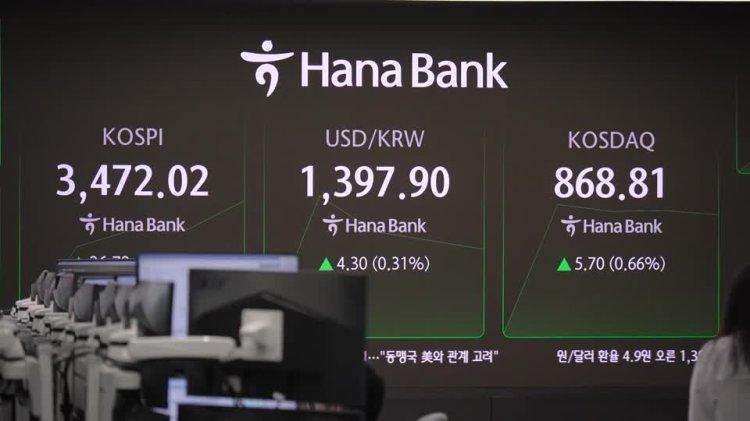
Asian equities opened higher as traders weighed the impact of the Federal Reserve’s recent 25‑basis‑point rate cut against lingering concerns over U.S. immigration policy and China’s monetary stance. Japan’s Nikkei 225 rose about 1.3 % to 45,194, while the Topix gained 0.8 % and 10‑year JGB yields climbed to 1.650 %, the highest since July 2007. South Korea’s KOSPI advanced 0.71 % to 3,464, boosted by a more than 4 % jump in Samsung Electronics after Nvidia approved its fifth‑generation high‑bandwidth‑memory product. The Kosdaq added 0.9 %. Taiwan’s index rose 21.23 points to 25,600, with early turnover of NT$4.71 billion. Shanghai’s Composite was flat at 3,822 after the People’s Bank of China left the one‑year LPR at 3.0 % and the five‑year LPR at 3.5 % for a fourth consecutive month. Hong Kong’s Hang Seng slipped 1 % and the Hang Seng Tech fell 1.18 %, reflecting property‑sector worries and broader caution on China’s growth outlook.
Australia’s ASX 200 rose 0.49 % and Singapore’s Straits Times Index edged higher, while India’s Nifty 50 dipped 0.12 % and the Sensex fell 0.48 %. Adani Power surged more than 15 % after a five‑for‑one stock split took effect, increasing share liquidity.
The market rally was underpinned by optimism that the Fed’s easing could lower global borrowing costs, supporting technology, export‑driven firms and semiconductor makers. A weaker yen made Japanese goods more competitive, aiding automakers and electronics companies. Nonetheless,analysts warned that momentum hinges on forthcoming U.S. inflation data, further central‑bank signals, and the trajectory of China’s slowdown, geopolitical tensions and energy‑price volatility. The early Asian session therefore displayed cautious optimism: equities rose on the Fed’s policy shift, but traders remained alert to headwinds from China’s unchanged loan rates, U.S. immigration policy and broader macro‑economic uncertainties.