

China’s eVTOL makes first cargo flight
AutoFlight aircraft carries blueberries 161 km, marking a breakthrough in unmanned logistics
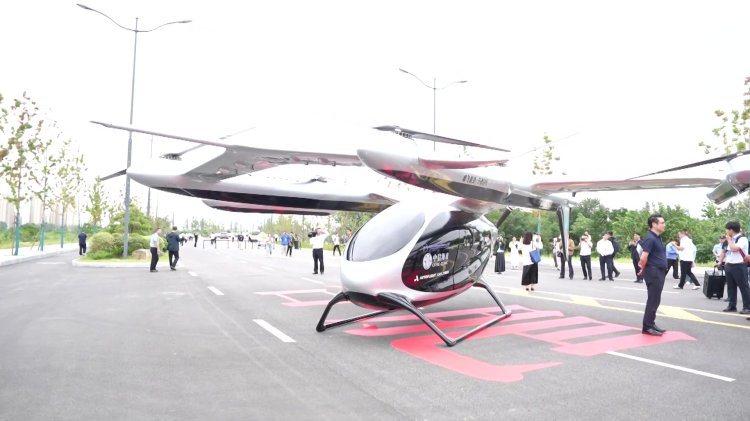
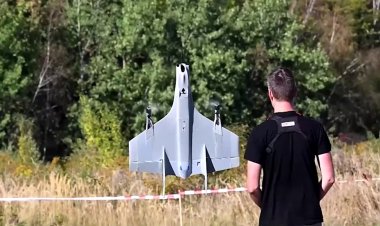
A Chinese‑developed unmanned electric vertical take‑off and landing (eVTOL) aircraft completed its first inter‑city cargo mission, carrying fresh agricultural products from a blueberry‑producing region to a major logistics hub in a provincial capital. The 2‑ton CarryAll V2000CG, built by Shanghai’s AutoFlight, is the world’s first ton‑class eVTOL certified for commercial operation by the Civil Aviation Administration of China.
The aircraft departed the National Blueberry Industrial Park in Huaining County, Anhui, loaded with roughly 200 kg of blueberry juice and parcels for SF Express. After a smooth 161‑kilometre flight lasting about one hour, it landed at the Baida Zhougudui Agricultural Products Logistics Park in Hefei. The route links Huaining— the largest county‑level blueberry cultivation area in the Yangtze River Delta— with a key wholesale market, offering a low‑altitude, unmanned logistics solution that is claimed to be about 50 % more efficient than conventional road transport.
The V2000CG’s certification marks the first time a ton‑class eVTOL has received commercial approval in China, allowing it to operate under the same regulatory framework as manned aircraft. Its design combines a high‑power electric motor, distributed‑propulsion rotors and autonomous flight‑control software, enabling vertical take‑off, cruise at up to 250 km/h and vertical landing without runway infrastructure. The aircraft’s payload capacity of two tonnes and range of over 300 km make it suitable for short‑haul freight corridors where road congestion and distance to rail hubs increase delivery times.
The successful flight demonstrates a breakthrough in long‑range, cross‑city eVTOL logistics, opening a primary aerial corridor between the two cities and surrounding counties. Operators describe the mission as both a critical technological validation and an innovative practice for collaborative management of inter‑city, low‑altitude cargo transport. By bypassing ground traffic, the system reduces delivery time from several hours to under one, cuts fuel‑related emissions, and lowers handling costs for perishable goods.
Industry analysts see the achievement as a template for scaling autonomous aerial freight across China’s extensive rural‑urban supply chains. Potential applications include rapid transport of fresh produce, pharmaceuticals, and time‑critical e‑commerce parcels. The Chinese government has indicated support for eVTOL development as part of its broader “dual‑carbon” strategy, aiming to decarbonize logistics while fostering high‑tech manufacturing.