Egypt opens Grand Egyptian Museum
Landmark complex near Giza pyramids showcases 100,000 artifacts
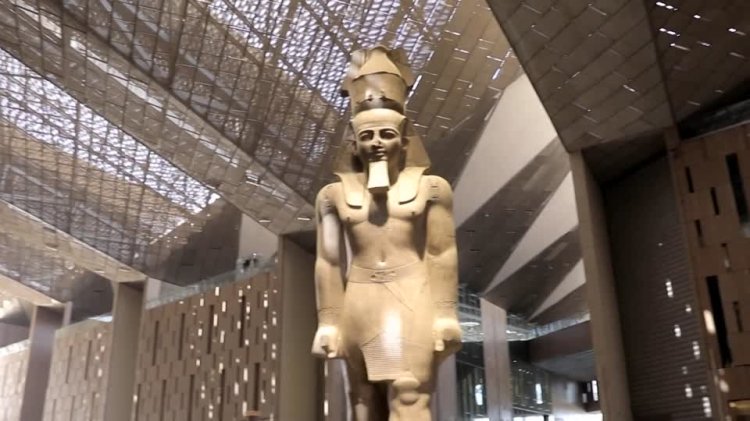
Egypt inaugurated the Grand Egyptian Museum (GEM) on the Giza Plateau near the pyramids and the Sphinx, marking the completion of a project more than two decades in the making. The sprawling complex, covering nearly 500,000 square meters, will display over 100,000 artifacts spanning millennia of Egyptian history. Officials and visiting foreign delegations attended the inauguration, which featured cultural performances, a light show and fireworks staged with the pyramids as a backdrop.
The museum’s centerpiece is the complete Tutankhamun collection—about 5,992 objects including the pharaoh’s iconic gold mask and two coffins—brought together in a single 7,500-square-meter hall for the first time since the tomb’s discovery. Curators will also present the King Khufu boats, with one displayed fully and another assembled in view of visitors. GEM combines advanced display and conservation technologies with expansive galleries intended to create immersive visitor experiences, and includes amenities such as restaurants, retail dedicated to heritage, a children’s museum, and conservation laboratories.
GEM’s design—featuring modern limestone and glass facades set to frame panoramic views of the ancient monuments—aims to link Egypt’s archaeological past with contemporary museum practice. Museum officials said high‑end display technology and new interpretive approaches are central to the visitor experience; the institution’s leadership described the project as both a cultural showcase and an economic stimulus for tourism.
Construction began in 2005 but faced repeated delays due to political instability and funding challenges. Authorities expect the museum to become a major catalyst for Egypt’s tourism sector, projecting substantial annual visitor numbers that would bolster revenues and local economies. President Abdel-Fattah al-Sisi hailed the opening as a testament to Egyptian creativity and continuity, framing GEM as “a gift from Egypt to the world” and a new chapter in national heritage presentation.
While celebrating GEM as the world’s largest museum devoted to a single civilization, officials and curators emphasized its role in conservation, research and education. The facility’s conservation center and laboratories are positioned to support long-term artifact preservation and scholarly work. With public opening imminent, Egyptian authorities announced operational plans to accommodate international visitors and integrate the museum with infrastructure serving the Giza Plateau, aiming to sustain both heritage protection and tourism growth.