Hyundai unveils record investment plan
The group pledged major spending to boost future technologies

Hyundai Motor Group will invest 125.2 trillion won (about $86.5 billion) in South Korea from 2026 to 2030, the company announced after Seoul finalized a trade deal that cuts U.S. tariffs on South Korean autos to 15% from 25%. The pledge, revealed after a meeting between President Lee Jae‑myung and Hyundai chair Euisun Chung, exceeds the 89.1 trillion won Hyundai and affiliate Kia invested domestically from 2021–2025 and forms part of broader commercial and diplomatic momentum tied to South Korea’s commitment to invest $350 billion in U.S. strategic sectors.
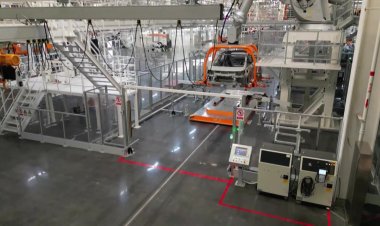
Hyundai said the spending will prioritise next‑generation technologies and industrial capacity. Roughly 50.5 trillion won will be allocated to artificial intelligence and new business opportunities, 48.4 trillion won to research and development, and 36.2 trillion won to optimize production facilities and build a major new high‑rise plant. Company leaders said the plan targets electric vehicles, batteries, autonomous driving and advanced mobility projects while modernising existing factories.
Chung told officials the group will diversify export markets, raise exports from domestic plants and more than double auto exports through new EV factories by 2030. He also pledged support for parts suppliers affected by the previous higher U.S. tariff regime, signalling measures to shore up the domestic supply chain and protect jobs. The investment is framed as a response to concerns that the tariff cut might encourage some manufacturers to relocate production overseas; Hyundai positioned the package as a commitment to maintaining and strengthening Korea’s industrial base.
Government officials described the announcement as an important corporate affirmation of confidence in the national economy and its future competitiveness in advanced automotive technologies. Hyundai characterised the initiative as one of its largest domestic commitments, intended to boost R&D, accelerate digital and electrification efforts, and secure long‑term industrial resilience amid shifting global trade conditions. Observers said the combination of reduced trade barriers and large domestic investment could accelerate South Korea’s role in global EV and mobility supply chains while reducing pressure on suppliers and local employment.