Chinese team finds oxidized minerals on Moon
Scientists say far-side samples reveal unexpected oxidation processes
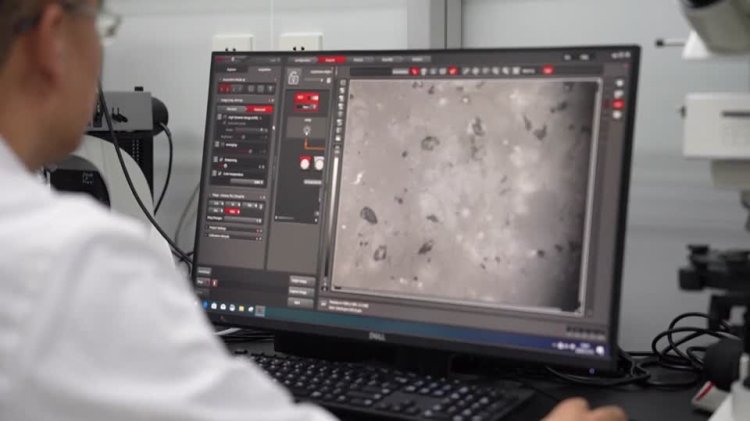
Chinese scientists report discovery of oxidized iron minerals in lunar samples returned by the Chang’e-6 mission, providing direct evidence of unexpected oxidation processes on the Moon and linking impacts to magnetic anomalies around the South Pole–Aitken Basin. A joint team from the China National Space Administration, Shandong University and the Chinese Academy of Sciences analysed roughly 3,000 milligrams of material from the mission and identified trivalent iron oxides — including hematite — in tiny clasts and melt droplets collected from the Moon’s far side.
The presence of such highly oxidized minerals is surprising because the lunar surface is generally a strongly reducing environment, lacking a protective atmosphere and significant water, conditions under which iron typically remains unoxidized. Researchers propose these minerals formed during large impact events: extreme heat and pressure from impacts would have melted local rock and produced transient plumes with newly generated oxidising agents, allowing iron to oxidize briefly before rapid cooling preserved the formed phases. Intermediate magnetic minerals such as maghemite and magnetite formed in these processes are put forward as likely carriers of the magnetic anomalies observed along the basin’s rim.
Published in Science Advances, the study links laboratory analysis of returned samples with remote-sensing observations by lunar orbiters that had hinted at oxidised patches but lacked direct confirmation. The results imply that impacts play a more active and complex role in modifying lunar surface chemistry than previously appreciated and offer a mechanism to explain localized magnetic signatures around the South Pole–Aitken Basin.
Scientists say the findings underline the value of Chang’e-6 as the first mission to return material from the Moon’s far side and expect further study of the sample suite to refine understanding of impact-generated melts, the evolution of lunar minerals, and interactions with external agents like the solar wind. The discovery broadens current views of lunar geologic history and will inform future lunar exploration and analysis.