SpaceX adds 29 Starlink satellites to orbit
Reused Falcon 9 boosts network coverage and capacity
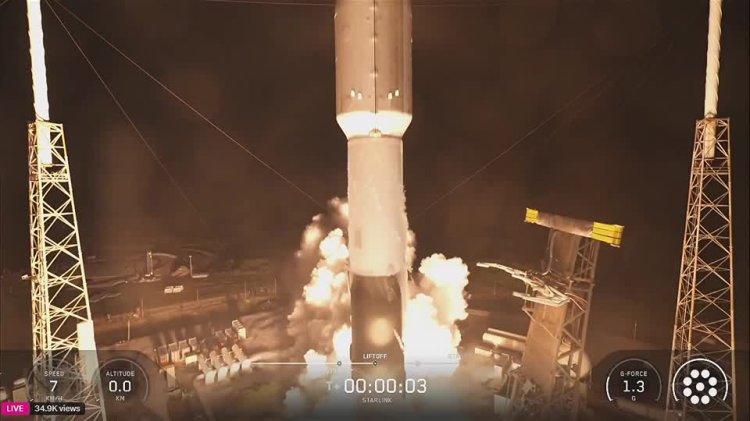
SpaceX launched a new batch of Starlink satellites into low-Earth orbit from Cape Canaveral, sending 29 units aboard a Falcon 9 rocket and reinforcing the company’s expanding broadband constellation. The mission used a previously flown first-stage booster, demonstrating reusable-rocket operations; after liftoff the booster returned to Earth and splashed down safely in the Atlantic. Satellite separation and deployment proceeded as planned, completing the primary mission sequence roughly an hour after launch.
The newly deployed satellites add to a constellation that already numbers in the thousands, further increasing network density in regions of high demand and improving service reliability for existing customers. These units are part of the latest Starlink generation, featuring inter-satellite laser links that enable direct communication between spacecraft, reduce dependence on ground stations and improve coverage over oceans and polar regions. Company engineers say the upgraded design lowers latency and raises data throughput, enhancing performance for maritime users, remote communities, research stations and emergency responders.
SpaceX continues to rely on Falcon 9 reusability to maintain a rapid launch cadence while cutting costs; the booster on this flight recorded its 14th mission, underscoring the program’s operational tempo. The firm has executed numerous orbital missions this year, sustaining a high launch frequency that industry analysts view as transformative for commercial space. SpaceX reports Starlink serves millions of customers across many countries and positions the service as a key revenue stream to fund longer‑term ambitions, including deep‑space projects.
The company’s rapid constellation build‑out has raised concerns among experts about orbital congestion and space‑debris management as the number of active satellites grows. Regulators and the industry continue to weigh mitigation measures even as operators press ahead with deployments. SpaceX said it expects further Starlink launches in the near term to continue expanding capacity and closing service gaps.
By augmenting its satellite network with the latest batch, SpaceX has moved closer to its goal of broadening global broadband availability and strengthening redundancy across its system. The mission reinforces both the technical advances—such as laser interlinks—and operational practices, like booster reuse, that underpin SpaceX’s drive to scale satellite internet services worldwide.