Surrey launches solar storm balloons
The monitors track radiation to improve space-weather models
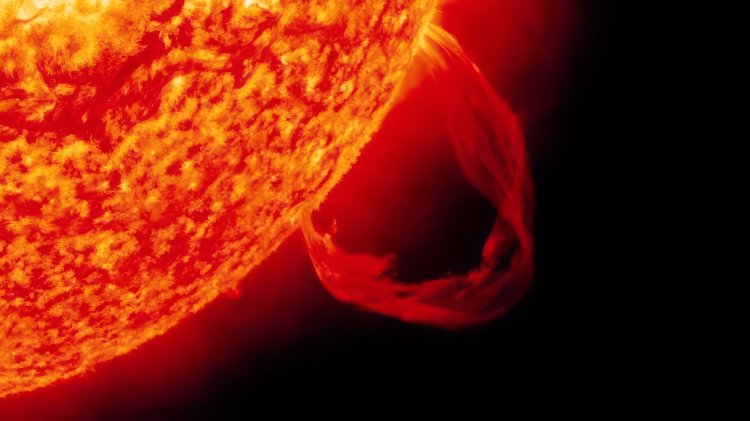
The University of Surrey’s Space Centre and the UK Met Office have begun flying balloon‑borne radiation monitors to sharpen understanding of solar storms and their threat to aircraft, satellites and power grids. Sensors built at Surrey have been carried above 100,000 feet (30 km) on weather balloons launched from Met Office sites in Camborne and Lerwick and from the Royal Netherlands Meteorological Institute in De Bilt. Initial flights were conducted as a proof of concept to compare balloon data with new ground‑based neutron monitors installed earlier at Camborne and Lerwick.
Researchers said the instruments measure charged particles and convert encounter counts into dose rates useful for radiation protection. The campaign produced timely data during a recent X‑class solar flare that generated one of the strongest “ground level enhancements” of atmospheric radiation in about 20 years. Teams rapidly deployed balloons during that event and, for the first time, collected continuous radiation profiles from ground level to 100,000 feet and back down, providing an unprecedented vertical picture of how solar energetic particles penetrate the atmosphere.
Met Office and Surrey scientists described the dataset as a valuable benchmark for validating and improving space‑weather models that estimate radiation exposure for aircrew and passengers during high‑latitude flights and for assessing risks to satellites and other infrastructure. Early analysis is under way and officials said initial indications are promising for enhancing model accuracy.
The launches form part of the SWIMMR (Space Weather Instrumentation, Measurement, Modelling and Risk) programme and are intended to feed near‑real‑time measurements into operational forecasting systems. Balloon data complement satellite and ground monitors by providing direct atmospheric profiles that can validate model outputs and help operators make more informed decisions about flight routing, satellite operations and grid protection during solar events.
Scientists warned that solar energetic particle events are expected to become more frequent around the current peak of the Sun’s 11‑year activity cycle, and that far larger storms recorded in historical and geological records could inflict widespread disruption on modern technology. The project aims to improve preparedness so that critical infrastructure need not be taken offline during extreme events.
Researchers cautioned that more flights and extended datasets are required to characterise long‑term behaviour, but they said the balloon measurements demonstrate a cost‑effective method to strengthen national space‑weather capabilities.