

Thousands march against fascism in Croatia
Protesters demand action to curb extremist violence
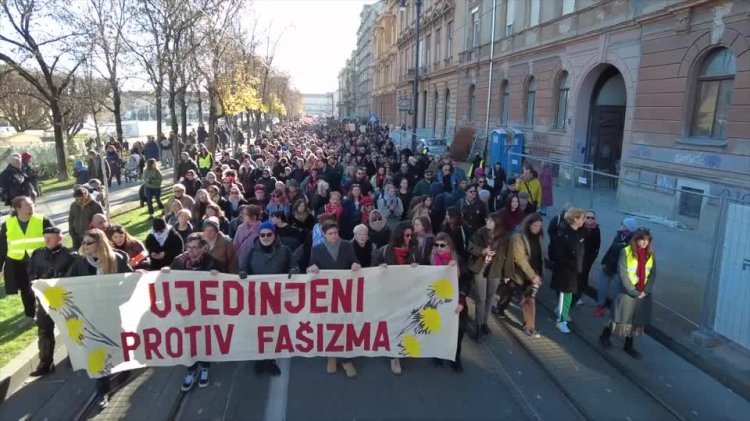
Thousands marched in Zagreb and at least three other Croatian cities in coordinated demonstrations opposing what organisers called a rise in fascism, intolerance and attacks on minorities. The “United Against Fascism” rallies in Zagreb, Rijeka, Zadar and Pula united dozens of organisations and individuals carrying banners and chanting slogans such as “We are all antifascists!” and calls to stop fascism and personality cults. Organisers demanded tougher enforcement against hate speech, monitoring of extremist groups, and full protection for national minorities, rejecting any form of patriotism linked to wartime fascist legacies.
Riot police escorted marches through city centres and toward central squares; most events unfolded without major incident. Local reports said the Rijeka demonstration was disrupted by several dozen counter-protesters who set off firecrackers and made fascist salutes before police intervened. In other cities, small counter-groups of young men dressed in black reportedly hurled insults, set off firecrackers and threw red paint at demonstrators; authorities said they were investigating those incidents.
The protests were partly sparked by recent attacks on members of the Serbian national minority during a Serbian cultural celebration and reflect wider concerns about far-right influence after a series of incidents this year, including a controversial concert by nationalist singer Marko Perković Thompson. Participants and speakers warned that the normalization of extremist symbols and rhetoric threatens democracy and multiculturalism, and urged authorities to criminalise pro-fascist symbols associated with Croatia’s World War II–era puppet regime.
Speakers framed the rallies as a stand against violence and intimidation and as a defence of democratic values and minority rights. Organisers said the demonstrations aimed to pressure the state to act decisively against hard-right groups and to enforce existing laws on hate speech and extremist activity. As crowds dispersed peacefully, organisers pledged to remain vigilant and continue mobilising to protect minorities and curb the spread of extremist ideologies.