U.S. expands Caribbean military presence
Washington says the deployment aims to boost maritime security
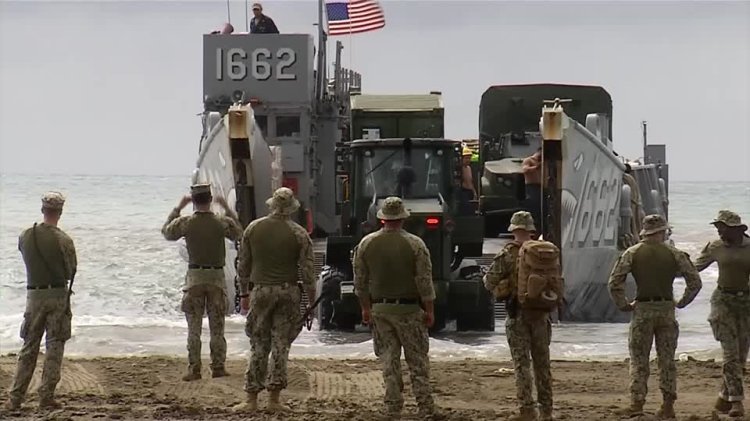
U.S. Marines unloaded trucks, armored vehicles and heavy equipment from military ships at a Caribbean port as part of an expanded U.S. military presence across the region. Footage showed large numbers of Marines disembarking and gear being moved ashore as additional ships, troops and specialized units were positioned around key maritime transit corridors long used by drug-trafficking networks and armed groups.
Officials say the buildup—comprising patrol vessels, surveillance aircraft, logistics elements and forward-deployed support teams—is intended to bolster maritime security, curb illicit trafficking and support regional partners facing rising instability. Pentagon sources described coordinated patrols already underway with local coast guards and training missions focused on interdiction tactics, radar systems and rapid response, with rotations planned to sustain a persistent presence.
The deployment follows months of heightened U.S. pressure on Venezuela, including strikes on suspected drug-smuggling boats, threats of military action and designation of the Cartel de los Soles as a foreign terrorist organization, and stems from joint assessments with regional governments identifying gaps in coastal monitoring, disaster response and intelligence sharing. Military officials framed the move as deterrence against transnational criminal organizations that have exploited economic crises, weak border controls and political volatility across parts of South America and the Caribbean.
Reactions in the region were mixed. Several governments welcomed the assistance, citing overstretched domestic forces struggling with expanding smuggling routes and gang violence. Others voiced concern that a larger U.S. footprint could stoke political tensions or overshadow regional institutions seeking greater autonomy in security affairs. Humanitarian groups cautioned that intensified patrols must avoid risking civilian migrant vessels fleeing hardship or violence.
U.S. officials emphasized the operation has no offensive mandate, portraying it as focused on maritime safety, counter-trafficking and emergency support—especially in anticipation of an active hurricane season that could further strain fragile states. With ships repositioned and personnel settling into new rotations, Washington indicated the enhanced presence will persist for the foreseeable future as it responds to a changing security environment in the Caribbean Basin.