French couple to attempt Atlantic relay swim
Witvoets aim to set records and raise global awareness for ocean conservation
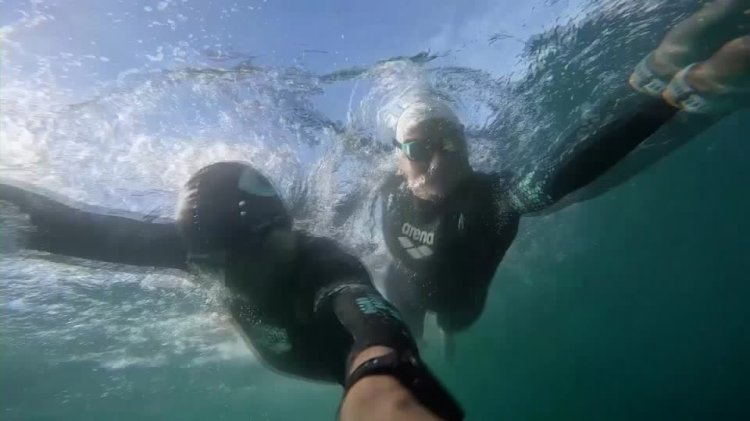
French open‑water swimmers Matthieu Witvoet and Chloé Léger Witvoet are preparing to attempt a record‑setting relay swim across the Atlantic from Cape Verde to Guadeloupe, aiming to combine athletic endurance with ocean conservation advocacy. The eco‑adventurer couple plans to cover about 3,800 km over an expected three‑month voyage, alternating six‑hour daily swimming shifts each, while sleeping aboard a drifting catamaran at night — a configuration intended to qualify their attempt for records for the longest swimming relay and the longest female ocean crossing “with drifting.” A four‑person support crew, including a nurse, will accompany them; donors and sponsors, among them French organic supermarket chain Biocoop, are providing logistical and dietary backing.
Their campaign is tightly linked to education and outreach. More than 63,000 schoolchildren across French‑speaking countries have enrolled in the swimmers’ “Ocean at School” programme, receiving weekly lesson plans on marine biodiversity, pollution and resource management and following the expedition through photos, videos and live updates. The couple say the project’s primary goal is to foster passion and stewardship for the sea among students, with classroom themes designed to turn pupils into “ambassadors of the ocean” over a three‑month curriculum.
The pair have spent two years preparing, focusing on technique, conditioning and injury prevention to endure long daily swims, minimal sleep and Atlantic conditions, including water temperatures around 23°C. Their previous endurance swims include crossings and awareness events such as the Strait of Gibraltar, a pollution‑focused swim down the Seine and a Marseille‑to‑Barcelona swim, providing operational experience for the larger transatlantic undertaking.
Organisers stress the expedition balances record ambitions with environmental messaging: success will be measured both in distance and in impact on public awareness. The couple acknowledge the physical challenge is immense and say that achieving the campaign’s educational and conservation objectives would be a greater triumph than completing the full crossing alone. The project’s multimedia outreach, school engagement and live updates aim to amplify ocean conservation themes beyond the swimmers’ physical feat, raising attention to threats like pollution and biodiversity loss while modelling low‑impact expedition practices.
If completed, the relay would represent one of the most ambitious open‑water swimming achievements and would spotlight ocean protection issues on an international stage. Even if weather or conditions force an early end, organisers say the expedition’s real value lies in the awareness it generates and the connections it builds with young people and communities around ocean stewardship.