

Orthodox Christmas marked in Bethlehem
Patriarch Theophilos III leads subdued celebrations at Church of the Nativity amid regional tensions
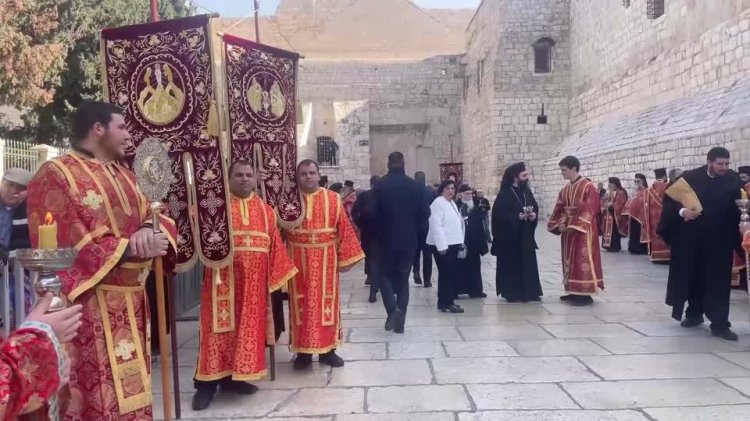
The Greek Orthodox Patriarch of Jerusalem, Theophilos III, joined senior clergy from several Eastern churches in Bethlehem to inaugurate Orthodox Christmas celebrations according to the Julian calendar, which this year coincided with the Catholic Epiphany. Patriarch Theophilos III was joined by heads and senior representatives of other Eastern denominations—including Ethiopian, Greek‑Syriac and Coptic hierarchs—at the Church of the Nativity, the shared holy site venerated as the traditional birthplace of Jesus. Worshippers and pilgrims gathered outside the basilica, where marching bands and processions preceded services and congregants lit candles, chanted ancient hymns and took part in clerical processions within the centuries‑old church.
Services were marked by a reflective and restrained tone amid ongoing regional instability. Church leaders emphasized prayer for peace and appealed for compassion and solidarity with civilians affected by conflict, framing the Nativity message in light of present hardships. Attendance was reduced compared with past seasons: clergy and locals cited displacement, economic strain and movement restrictions that have curtailed tourism and limited many families’ ability to travel to Bethlehem. The smaller crowds and heightened security underscored how the city’s Christian community—already diminished by years of economic and political pressures—continues to bear the brunt of declining pilgrimage income and recurrent instability.
Despite constraints, clergy and congregants stressed the devotional significance of marking Orthodox Christmas in Bethlehem, expressing resolve to preserve liturgical traditions and communal observance. The ceremonies at the Church of the Nativity highlighted the ecumenical sharing of the site by multiple Eastern churches and the Catholic community, even as calendar differences place Orthodox Christmas on January 6 in the Julian reckoning. As services concluded, bells pealed across the old city and clergy exchanged blessings, offering a moment of spiritual continuity and a renewed public plea for peace and relief for those affected by the region’s ongoing crises. Observers noted that the subdued celebrations reflected both the resilience of local religious life and the broader social and economic toll exacted by years of conflict and reduced pilgrimage activity.