


NASA rolls back Artemis II rocket
Space agency delays lunar mission for added inspections
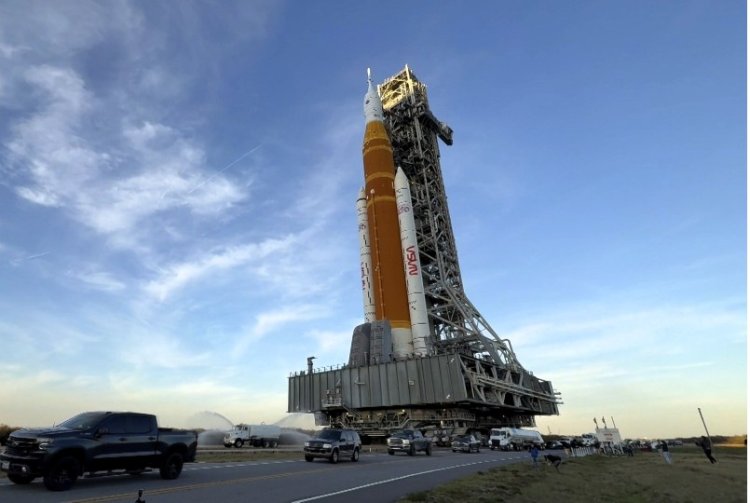
NASA will roll back its Artemis II spacecraft from the launch pad to the Vehicle Assembly Building for additional inspections and technical work, a move that affects preparations for a launch window previously targeted for March. The decision follows ongoing evaluations of ground systems and spacecraft components as the agency works to ensure mission readiness and safety.
Artemis II, the first crewed mission of NASA’s Artemis program, is designed to send astronauts on a lunar flyby aboard the Space Launch System rocket and Orion spacecraft. The rollback allows engineers to address outstanding issues that cannot be fully resolved at the launch complex, including checks related to propulsion systems, electrical connections and environmental control systems.
Agency officials said the step is precautionary and part of standard pre-launch protocols when anomalies or required modifications are identified. By returning the rocket and spacecraft to the assembly building, teams gain access to critical components that are otherwise difficult to reach on the pad. The move, however, reduces flexibility in meeting the March launch window and could push the mission timeline further depending on the scope of the work.
NASA has emphasized that crew safety remains the top priority for Artemis II, which will carry four astronauts on a multi-day mission around the Moon before returning to Earth. The flight is seen as a key milestone in the Artemis program’s broader goal of establishing a sustained human presence on and around the Moon later this decade.
Officials have not announced a revised launch date, stating that a new timeline will be determined after engineers complete inspections and verify system performance. The rollback underscores the complexity of deep-space missions and the technical challenges involved in preparing a next-generation lunar program.