

South Korea hosts first Central Asia summit
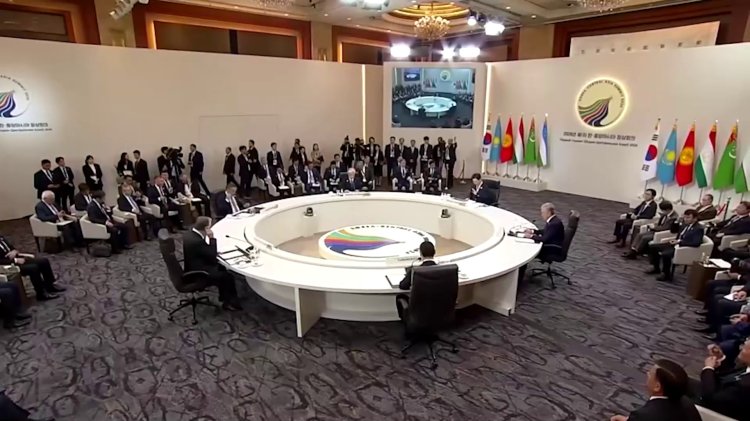
South Korea hosted a landmark summit with five Central Asian nations, their leaders meeting for the first time. President Lee Jae Myung welcomed counterparts from Kazakhstan, Kyrgyzstan, Tajikistan, Turkmenistan, and Uzbekistan to Seoul. The summit elevated ministerial dialogue to the highest political echelon, reflecting Central Asia's growing strategic importance for South Korea. The "Seoul Declaration" was a key outcome, outlining 30 years of collaboration and strengthening ties in economic, energy, and supply chain security. Summits will occur biennially, with a Senior Officials' Meeting for continuous engagement. Central to discussions was a "new Silk Road" concept, leveraging Central Asia's critical mineral and energy resources with South Korea's advanced technology. President Lee emphasized mutually beneficial value chains, beyond raw material trade to exploration, processing, and high-value goods like batteries and semiconductors. This aims to diversify South Korea's supply chains and promote industrial development in Central Asian states. Cooperation in infrastructure, digital transformation, and artificial intelligence saw MOUs signed for joint projects and technology transfer. Leaders reaffirmed commitment to peace and stability, including denuclearization of the Korean Peninsula. A business forum finalized commercial agreements and export contracts. "Korea Desks" were agreed upon in Central Asian governments to support South Korean businesses. The summit sets a robust foundation for a deepened partnership, fostering innovation, prosperity, and connectivity across Eurasia.