Typhoon Matmo floods Hanoi after heavy rains
Widespread inundation disrupts transport and exposes city’s drainage woes
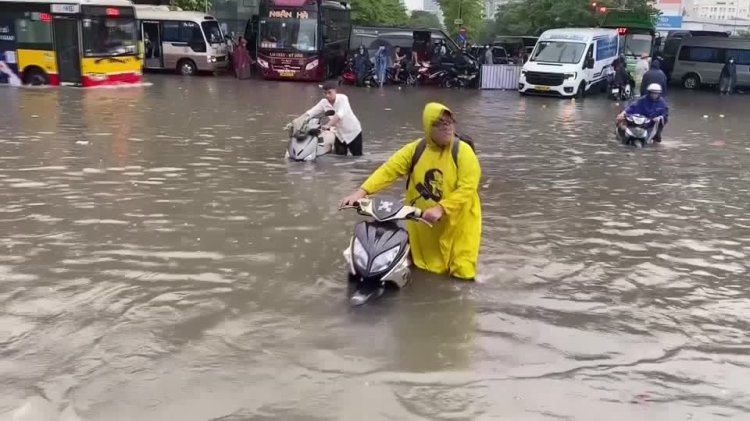
Torrential rains brought by Typhoon Matmo swept through Hanoi, adding to a month-long sequence of intense storms that have battered northern Vietnam and repeatedly inundated the capital. Prolonged downpours submerged major thoroughfares, leaving motorbikes and cars stranded and forcing residents to wade through calf- to knee-deep water as inner-city drainage systems proved unable to handle the volume. In the worst-hit districts — including Dong Da, Ha Dong and Thanh Xuan — streets resembled rivers after hours of continuous rain; some vehicles stalled or were carried by currents while others had to be abandoned. Emergency crews worked through the night, deploying pumps and sandbags to divert water from critical routes, but heavy rainfall consistently outpaced the city’s limited drainage capacity.
The flooding brought traffic to a standstill, shut several bus routes, and caused power interruptions in parts of residential areas. Schools and some public offices were closed or shifted to online teaching as a precaution. Operations at Noi Bai International Airport were disrupted, with a number of flights delayed or rescheduled because of the storms. Meteorologists said the rains were driven by a tropical low-pressure system moving inland from the Gulf of Tonkin, producing strong gusts and intense downpours; rainfall totals in places exceeded 180 millimeters in under 12 hours. The national weather agency forecast further rain and thunderstorms and warned that up to three additional storm systems could affect the country before the end of next year, increasing the short-term risk of additional flooding and landslides in nearby provinces such as Hoa Binh, Lao Cai and Yen Bai.
The latest inundation compounds the damage and disruption left by recent storms. Many families were still removing mud and debris after flooding from Typhoon Bualoi, which struck earlier and caused significant destruction and fatalities. Residents expressed growing frustration and fatigue at what many described as a recurring crisis during the monsoon and storm seasons. Shopkeepers, homeowners and commuters reported mounting economic and personal losses, and criticized Hanoi’s aging drainage infrastructure and rapid, often unregulated urban expansion — factors they say have reduced natural flood basins and worsened surface runoff.
Local authorities acknowledged the scale of the problem and pledged reviews of the city’s flood defenses, drainage networks and urban planning practices, while emergency services continued cleanup and rescue operations. Officials urged residents to stay indoors where possible, stock essential supplies, avoid traveling through flooded areas, and heed safety instructions as crews work to restore services and clear inundated streets.