

Venezuela enacts amnesty law
Rodríguez signs law to free hundreds jailed for political cases under broad pardon framework
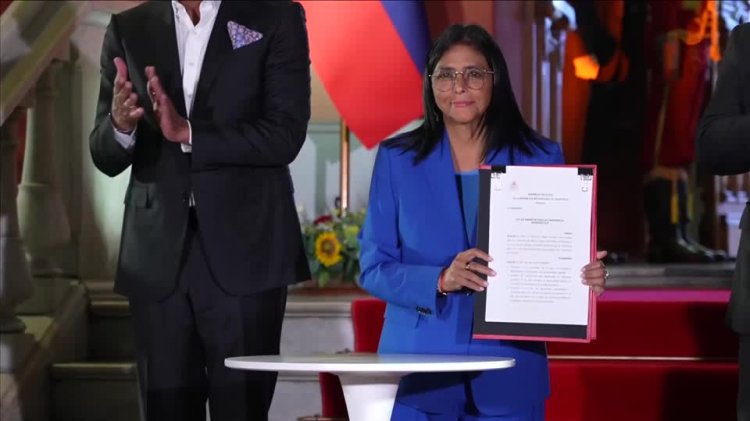
Venezuela’s acting president, Delcy Rodríguez, signed an amnesty law after the National Assembly, controlled by the ruling party, approved the measure as a step toward national reconciliation. Rodríguez signed the law alongside Interior Minister Diosdado Cabello and her brother Jorge Rodríguez, president of the Assembly, saying the measure “opens an extraordinary door for Venezuela to reunite and learn to coexist democratically and peacefully.”
The legislation grants amnesty for involvement in political protests and “violent actions” spanning episodes of unrest listed across multiple years, including events tied to a brief 2002 coup and demonstrations or elections in 2004, 2007, 2009, 2013, 2014, 2017, 2019, 2023, 2024 and 2025. The law expressly excludes people convicted of “military rebellion” for events in 2019. It does not specify all crimes eligible for amnesty in the final text, nor does it restore seized assets, lift political bans, or cancel sanctions imposed on media outlets—provisions that appeared in earlier drafts.
A special commission has been appointed to oversee implementation; Rodríguez urged it to act swiftly and review cases not covered by the measure. Officials say the law could lead to the release of hundreds detained for political reasons, including opposition figures, activists, journalists and lawyers, though human rights groups caution that exclusions, procedural hurdles and requirements to present before the judiciary may limit or delay broad-based releases.
Reaction was mixed: supporters framed the law as a pragmatic step toward easing polarization and facilitating dialogue, while critics warned it falls short of comprehensive justice and accountability. Observers noted the move occurs amid wider political shifts and will be closely watched for its effects on domestic reconciliation, opposition dynamics and Venezuela’s human rights situation. Legal experts say implementation details, judicial cooperation and whether the commission operates transparently will determine the law’s practical impact.