VR transforms UK driving instructor training
AA Driving School adopts Meta headsets to improve safety and teaching
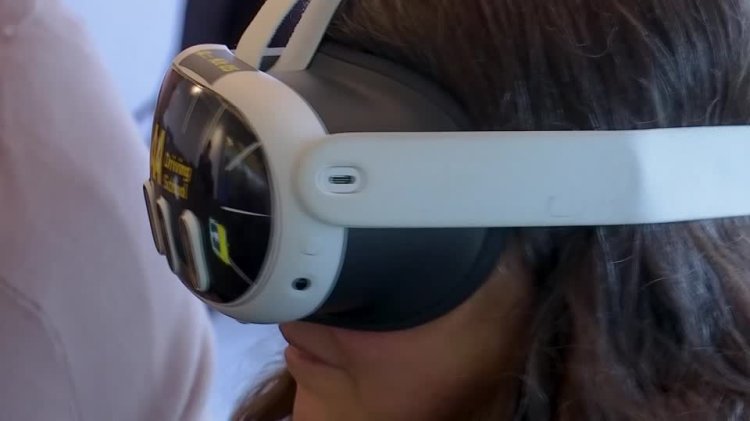
Driving instructor trainees are increasingly using virtual reality (VR) to practise complex road scenarios in a safe, controlled setting, the AA Driving School Academy reports. The academy has adopted Meta’s Quest 3 headsets to expose instructor-trainees to modern hazards—rising numbers of cyclists, hired e-scooters and dense shared-space environments—before they encounter them in real traffic. Mark Born, head of the academy, said VR lets trainers guarantee exposure to particular scenes and road types, reducing pressure and improving preparedness.
The VR modules replicate realistic conditions including pedestrian crossings, cyclists weaving through traffic, night driving and adverse weather, and emphasise core teaching points such as mirror checks and traffic awareness. The system streams live content to tablets, replacing earlier pre-rendered-video setups and offering faster processing and a more intuitive interface. The academy operates 18 headsets and trains up to 72 people weekly; about half of trainees now choose the VR course over traditional methods. The school trains roughly 500 instructors annually and reports improved pass rates across theory, driving ability and teaching assessments since integrating VR.
The shift responds to changing road use in Britain: Department for Transport data show daily cycle-stage journeys in England more than doubled from about 600,000 in 2012 to 1.33 million in 2024, and recent figures indicate roughly 19,500 rentable e-scooters available daily. These trends, combined with a growing instructor workforce—around 41,000 on the DVSA register at the end‑March 2024—and a backlog of driving tests, have pushed providers to scale up training and recruitment while enhancing training quality.
Proponents say VR accelerates instructor qualification by allowing repeated, controlled exposure to rare or hazardous events—sudden pedestrian movements, unexpected obstacles, or mixed-traffic conflicts—without putting learners or the public at risk. Customisable modules can simulate urban, rural or motorway environments and be tailored to local road layouts or specific teaching needs, while analytics could track trainee reaction times and decision-making patterns.
Limitations remain: VR cannot replace essential in-car experience, and successful translation of simulated skills to live driving requires thoughtful curriculum integration. Cost, equipment upkeep and potential discomfort for some users (motion sickness) are practical barriers. Despite this, the AA Driving School presents VR as a growing complement to traditional methods, one that helps instructors and future learners adapt to evolving mobility patterns and complex shared-road environments, potentially improving road safety and teaching efficiency as adoption expands.