

Xi hosts Macron in Beijing talks
Leaders meet to seek progress on trade ties and diplomacy
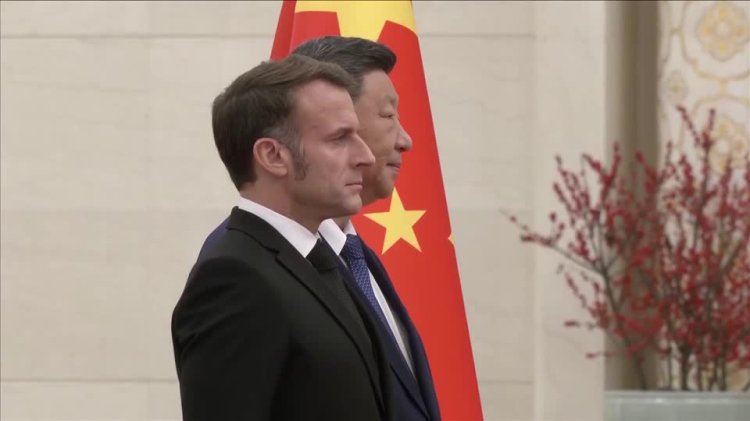
Chinese President Xi Jinping received French President Emmanuel Macron in Beijing during the second day of Macron’s three-day state visit, where the two leaders took part in a welcome ceremony and held talks aimed at strengthening bilateral ties amid rising global trade tensions. Macron arrived with a large delegation of business leaders from energy, aviation, agriculture and technology sectors, underscoring the economic focus of the trip as France and the EU seek fairer market access and more balanced trade with China.
Talks concentrated on rebalancing EU–China commercial relations, with France pressing for improved conditions for European firms and raising concerns about state-subsidised competition and limited market access. Chinese officials signalled willingness to deepen economic cooperation but warned against “politicizing trade issues.” Observers expect agreements or understandings in areas such as energy, agriculture and green technology, while noting persistent disputes over subsidies, regulations and industrial protections that could limit deeper convergence.
Macron also urged Beijing to exercise its influence with Moscow to support diplomatic efforts aimed at de-escalation in Ukraine, framing China as a major global player with responsibility to help resolve the conflict. Analysts view Macron’s posture as an attempt to balance robust European unity with pragmatic engagement—seeking to avoid outright antagonism while responding to China’s growing assertiveness across trade, security and diplomacy.
The trip comes as China positions itself to attract business amid U.S. tariffs that have disrupted global trade, presenting Beijing as an alternative partner for European companies. France counts China as a significant trading partner—Chinese customs data show China buys roughly $35 billion of French goods annually, including cosmetics, aircraft parts and spirits—while France imports about $45 billion of mainly low-value consumer goods from China, often via online platforms benefiting from an EU customs waiver for purchases below 150 euros.
Strategically, the visit occurs ahead of major international events—France’s hosting of the 2026 G7 summit and China’s chairing of next year’s APEC forum—adding diplomatic weight to Macron’s mission to position France as a mediator between China and Western powers. While the visit is likely to produce cooperative commitments on select sectors, analysts caution it will not resolve deeper systemic differences over industrial policy, market openness and trade practices, leaving Europe to continue a careful balancing act between economic engagement and safeguarding strategic interests.