Actress ‘Claudia Cardinale’ dies at 87
Italian cinema legend remembered for timeless roles
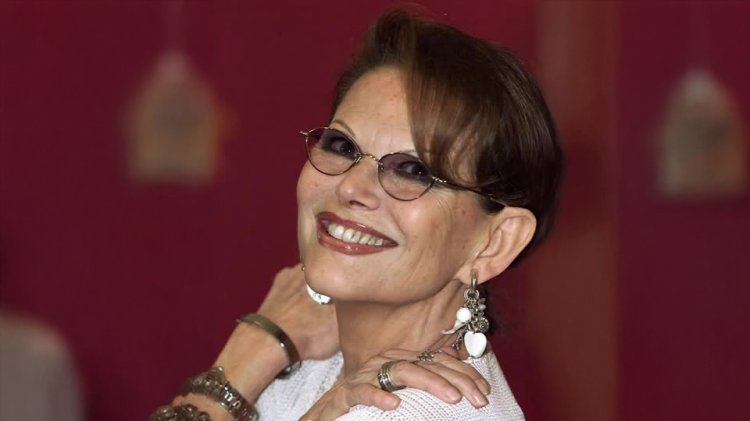
Claudia Cardinale, the celebrated actress whose elegance and commanding presence defined post‑war European cinema, died at 87. Born in Tunis to Sicilian parents, she grew up speaking a Sicilian dialect and attending a French‑language school, which later required her early Italian film roles to be dubbed. Her entry into the movie world came after winning a 1957 beauty contest in Tunis, a prize that included a trip to the Venice Film Festival and opened the door to the industry.
A hidden pregnancy in 1958 added personal turmoil; she gave birth to a son, Patrick, in London and concealed his existence by presenting him as a younger brother while her parents raised him. After a series of modest parts, Cardinale’s breakthrough arrived in 1963 when she appeared in Federico Fellini’s 8 ½ and Luchino Visconti’s The Leopard opposite Burt Lancaster. Shooting the two films simultaneously forced her to adopt different hair colours for each role, and she later contrasted the directors’ methods—Fellini’s noisy, improvisational sets versus Visconti’s silent, theatrical discipline.
The success propelled her into Hollywood, leading to memorable roles in Blake Edwards’s comedy The Pink Panther and Sergio Leone’s western Once Upon a Time in the West (1968). Over a career spanning more than five decades, she collaborated with cinema giants such as Marcello Mastroianni, Alain Delon, Charles Bronson and many others, earning a reputation for portraying independent, resilient women rather than conforming to the era’s typical female‑star image.
Tributes poured in from the global film community. Italy’s Ministry of Culture described her as a “treasure of Italian cinema.” Fellow actors and directors recalled her warmth, professionalism and the lasting influence she exerted on generations of filmmakers. Although she spent most of her adult life in Rome, Cardinale remained proud of her North‑African roots, often emphasizing how her Tunisian upbringing shaped her identity and artistic sensibility.
Her passing marks the end of an era for European cinema, closing the chapter on a figure whose performances—ranging from the nuanced vulnerability in Rocco and His Brothers to the fierce determination in Once Upon a Time in the West—continue to inspire audiences and creators worldwide.