

China's humanoid robot race accelerates
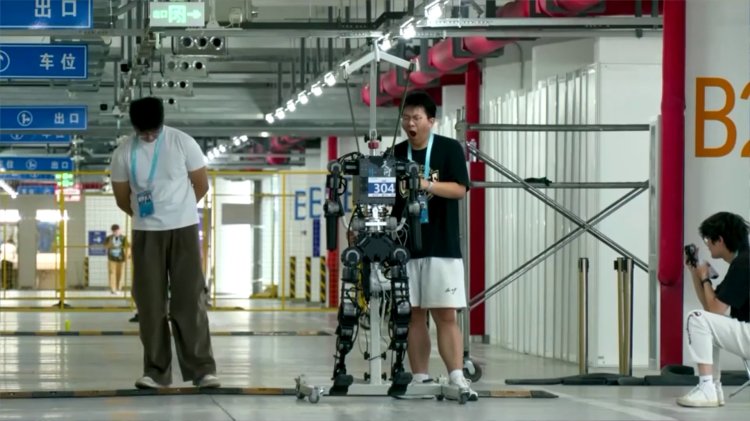
China intensely pursues humanoid robot development. The nation aims to establish two to three globally leading firms by 2025 and produce over one hundred thousand units this year. This push is part of a broader strategy to expand its role in emerging technologies.Despite rapid advancement, hurdles remain. Failures and demanding development paces highlight complexity. Current humanoids, impressive in demonstrations, lack advanced intelligence and dexterity for general-purpose work. Experts note these machines struggle with intuition or deviations from routines; their "IQ" is low. Fine motor tasks, like folding a T-shirt, remain challenging; robots need extensive retraining for each new function.China rapidly scales its manufacturing base, projected for over 90 percent of global output in 2025 and 97 percent in H1 2026. Key Chinese firms like Unitree, AgiBot, and UBTech lead this surge. Government actively promotes deploying humanoids from labs into real-world settings: factories, warehouses, healthcare. A nationwide program mandates local governments and SOEs to deploy ten thousand units by end of 2026, targeting over one hundred high-value applications.To guide growth, China proposes over one hundred key standards for the humanoid robot industry by 2028, covering capability testing, key technologies, and safety. Standardization and mass deployment aim to gather vast real-world operational data, crucial for improving embodied AI models. While commercial demand lags manufacturing capacity, with units in research labs, the long-term vision is for humanoids to address an aging workforce and rising labor costs.