Flamingos flee polluted dam in South Africa
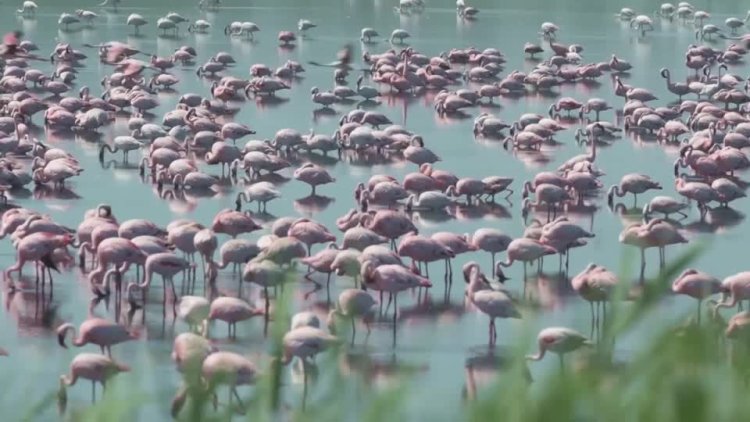
The lesser flamingo, once thriving at Kamfers Dam in South Africa, has abandoned this crucial breeding site due to severe pollution from raw sewage. This dam was one of the last remaining locations in South Africa where these near-threatened birds could breed, alongside sites in Botswana, Namibia, and Tanzania. Conservationists report that the toxic conditions have led to the disappearance of the flamingos, which numbered around 71,000 in 2020, with thousands of chicks born each season.
Ester van der Westhuizen-Coetzer, a wetlands specialist, emphasized that breeding cannot resume until water quality improves. The dam, once vibrant with flamingos, is now plagued by a foul-smelling green sludge. Local farmer Brenda Booth expressed her despair over the situation, noting that the flamingos have relocated but are not breeding elsewhere. She recently secured a court order for the municipality to address the sewage crisis, which has been exacerbated by vandalism at the sewage plant.
Municipality manager Thapelo Matlala acknowledged the urgency of the issue, highlighting the economic benefits of flamingo tourism for the city of Kimberley. However, the municipality lacks the necessary funds, estimated at 106 million rand ($5.92 million), to rectify the sewage problem.
The International Union for Conservation of Nature (IUCN) is expected to elevate the lesser flamingo's threat level to 'vulnerable' due to habitat loss and declining breeding sites. Conservation biologist Tania Anderson noted that the loss of Kamfers Dam will significantly impact flamingo populations in the region. The broader issue of sewage pollution is threatening aquatic ecosystems worldwide, as highlighted by a 2021 study in Biological Conservation.