Lee Jae-Myung, Xi Jinping seek reset
South Korea and China agree new cooperation push in Beijing talks
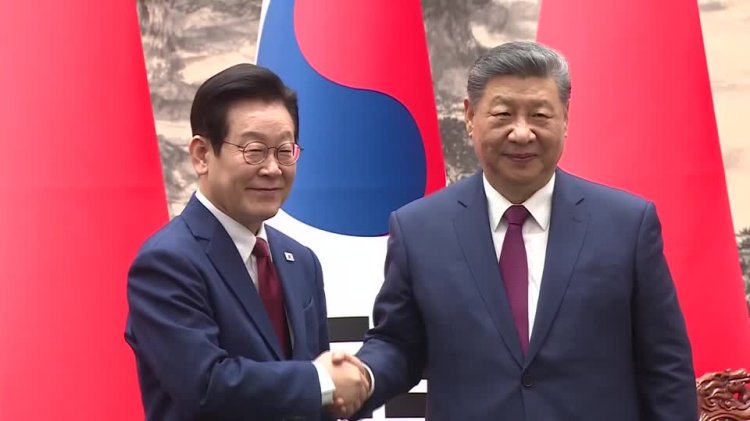
South Korean President Lee Jae‑myung and Chinese President Xi Jinping met in Beijing in a summit that both sides portrayed as aimed at resetting relations and restoring full-scale cooperation across political, economic and cultural spheres. Lee called the talks the start of a "new phase" and urged that 2026 mark a turning point for Korea‑China ties; Xi said China was willing to improve relations on the basis of mutual respect and shared interests, and both leaders stressed stronger strategic communication and managing differences to prevent escalation.
The visit—Lee’s first trip to Beijing since taking office and his second meeting with Xi in two months—reflects intensified diplomatic engagement as Beijing seeks deeper economic collaboration and tourism links with Seoul amid frayed ties between China and Japan. Officials reported 15 signed agreements spanning technology, intellectual property, transportation and other cooperative fields, and said working‑level talks and regular diplomatic channels would continue to implement the accords.
Negotiations touched on trade and supply‑chain resilience, where both capitals voiced interest in closer economic coordination given China’s status as South Korea’s largest trading partner. Seoul emphasized predictable relations and expanded people‑to‑people exchanges; Beijing highlighted mutual benefits for regional peace and development. In conversations about security, leaders discussed Peninsula developments: Lee reiterated South Korea’s view that dialogue is essential to reducing tensions with North Korea, while Chinese officials warned against actions that could heighten confrontation in Northeast Asia.
Observers see the summit as part of Seoul’s pragmatic balancing act—seeking to sustain its alliance with Washington while reopening and stabilizing relations with Beijing to protect economic interests. Analysts caution, however, that structural obstacles remain: divergent security alignments, Chinese technology restrictions, and fallout from past disputes over tourism, cultural exchanges and trade measures could limit rapid normalization. Implementation of the 15 agreements and follow‑through in bilateral mechanisms will be key tests of sincerity and durability.
Both governments framed the engagement as mutually beneficial and pledged continued interaction at senior and working levels. South Korean officials expressed hope the visit would mark not just a diplomatic reset but the creation of "irreversible" momentum toward strategic cooperation; Chinese officials underscored the need for careful management of differences to sustain steady ties.