North Korea celebrates U-17 women’s football triumph
The team returned home after winning the 2025 World Cup in Morocco undefeated
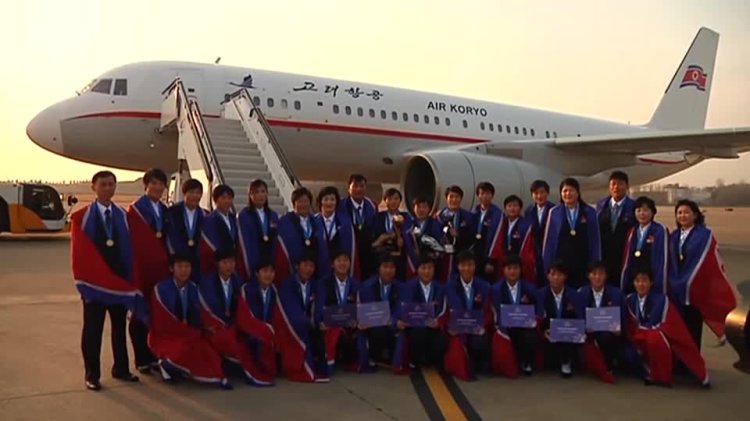
North Korea’s under-17 women’s football team was hailed on return to Pyongyang after winning the 2025 FIFA U-17 Women’s World Cup in Morocco, state media reported. The squad landed to receptions by Sports Minister Kim Il Guk, officials and family members at the capital’s international airport, where footage released by the official KCNA news agency showed cheering crowds, flags and banners.
The team completed an undefeated tournament run capped by a 3-0 victory over the Netherlands in the final, securing North Korea’s fourth U-17 Women’s World Cup title and a second consecutive championship at this age level. The result consolidates the country’s position as the competition’s most successful side.
Forward Yu Jong Hyang, honored with the Golden Ball and reported to have also won the Golden Boot, pledged to intensify training so the trophy remains “forever” associated with the nation. State coverage lauded the squad’s discipline, defensive organisation and rapid counterattacking play, and credited coaching staff and domestic athlete development programmes with producing a physically robust and tactically well-drilled team.
Officials and state broadcasts framed the victory as a source of national pride and a demonstration of collective strength, portraying the achievement as evidence of resilience despite the country’s international isolation. Commentaries said the success is expected to boost domestic morale and enhance North Korea’s sporting reputation abroad. Reports also noted plans to expand investment in youth football and to present the team’s model as an inspiration for future generations of athletes.
Analysts outside the country point to structured, long-term development within North Korea’s sports schools as a key factor behind repeated successes in women’s youth football. The team’s performance in Morocco underscored effective preparation, tactical discipline and clinical finishing in critical matches.
The celebratory return reinforced state narratives that link sporting triumphs to national dignity and collective effort. North Korean media emphasised both individual accolades and the team’s unity, while official ceremonies highlighted the government’s role in supporting elite athlete development. The victory adds to a string of notable results at youth level and will likely shape further policy and funding decisions for women’s football programmes in the country.