

Protests greet Herzog visit in Canberra
Demonstrators rally against Israeli president’s trip
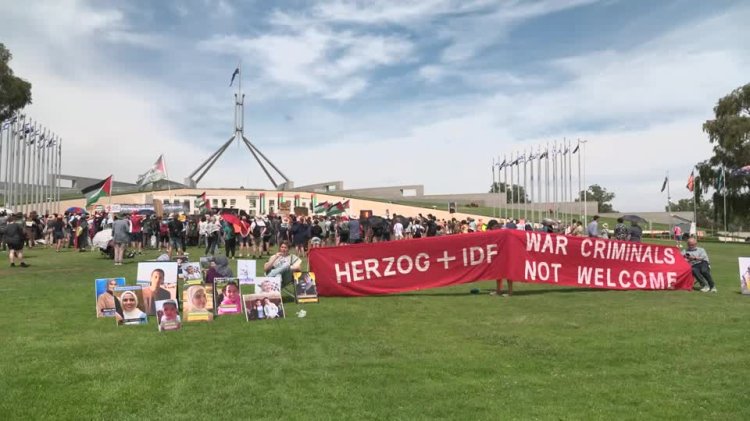
Hundreds of protesters gathered in front of Parliament House in Canberra to demonstrate against the visit of Israeli President Isaac Herzog, joining a series of rallies across the country that have followed his arrival. Demonstrators carried Palestinian flags, banners and placards denouncing Israel’s military actions in Gaza and the West Bank, called for an immediate ceasefire and urged the Australian government to adopt a firmer humanitarian stance. Organizers described the gatherings as peaceful expressions of solidarity with Palestinians and said Herzog’s presence in Australia during ongoing violence warranted public protest.
Police maintained a visible presence to keep the demonstrations orderly and to separate them from smaller pro-Israel counter-protests; authorities reported no major incidents though tensions briefly flared when opposing groups exchanged chants. Speakers at the rallies accused Israel of human rights violations and pressed for greater accountability for civilian casualties, while Jewish community leaders and some officials cautioned against rising antisemitism and stressed the importance of diplomatic engagement.
Herzog’s visit included formal engagements with Australia’s Governor‑General and meetings with Prime Minister Anthony Albanese at Government House and later at parliamentary offices. Australian officials framed the visit as part of ongoing diplomatic relations and cooperation on regional security, reiterating support for Israel’s right to security alongside calls for civilian protection and increased humanitarian aid to Gaza. Herzog described the trip as emotional and an opportunity to deepen bilateral ties.
Human rights groups urged all parties to prioritize civilian safety and a political solution to the conflict, and advocacy networks signaled potential further protests if international pressure on the crisis is viewed as insufficient. The events have prompted broader debates in Australia about foreign policy, humanitarian obligations and the limits of public protest, highlighting how the Middle East conflict continues to shape public discourse and diplomatic interactions far beyond the region.